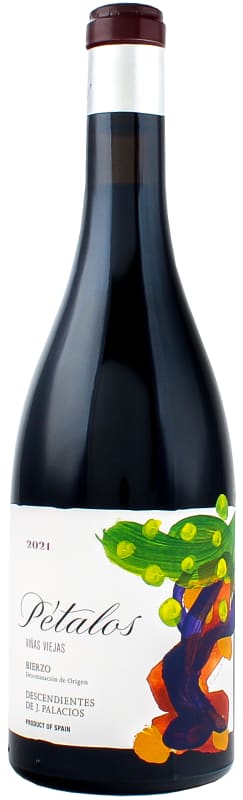


Winemaker Notes
The vineyards used in Petalos include estate vineyards and rented vineyards in and around the village of Corullon. The vines range in age from 40-90 years old. All wine making is done biodynamically.
*The label for Descendientes de José Palacios Pétalos Viñas Viejas is in the process of changing. You may receive either of these two labels featured above, with or without "Viñas Viejas." The wine is the same for both. Specific labels cannot be requested.
Professional Ratings
-
Robert Parker's Wine Advocate
The barrel sample of the 2021 Pétalos was lower in alcohol than ever (13.5%), and the wine felt a bit reductive and needed time in the glass to open up. That's not a bad sign in my book, and the wine was lighter, a little narrower (a bit the style of the year), with finesse and freshness (despite not having high acidity, but it's the balance that makes it fresher), elegant and juicy, with very fine, chalky tannins. 2021 saw a good crop and, except for Las Lamas and La Faraona, volumes are similar, even a little more in Pétalos, because the early-harvested vineyards delivered very healthy grapes and there was no need to discard or sort the grapes, which was not the case in the vineyards that were harvested late. There will be some 280,000 bottles, and the 2021s might also have a shorter élevage.
Barrel Sample: 93-94 -
Wine Spectator
A bright, harmonious red, with savory notes of mineral and cigar box on the nose, transitioning on the silky, mediumbodied palate to accent flavors of crushed black raspberry, black olive and milled pepper. Reveals light, fine tannins on the finish.


Primarily found in the Bierzo, Ribeira Sacra and Valdeorras regions of Spain and in the Dão of Portugal (where it is called Jaen), Mencia is an early ripening, low acid grape that can produce wines of great concentration, complexity and ageability. And yet Mencia once suffered from a poor reputation and deemed capable of producing simple and light red wines. Post-phylloxera growers would grow this variety on low, fertile plains, which produced high yields and uncomplicated finished wines. Somm Secret—The recent rediscovery of the ancient, abandoned vines planted on rugged hillsides of deep schist has unveiled the potential of Mencia and added discredit to its old reputation.

One of the few northwestern Spanish regions with a focus on a red variety, Bierzo, part of Castilla y León, is home to the flowery and fruity Mencia grape. Mencia produces balanced and bright red wines full of strawberry, raspberry, pomegranate, baking spice, pepper and black licorice. The well-drained soils of Bierzo are slate and granite.