


Winemaker Notes

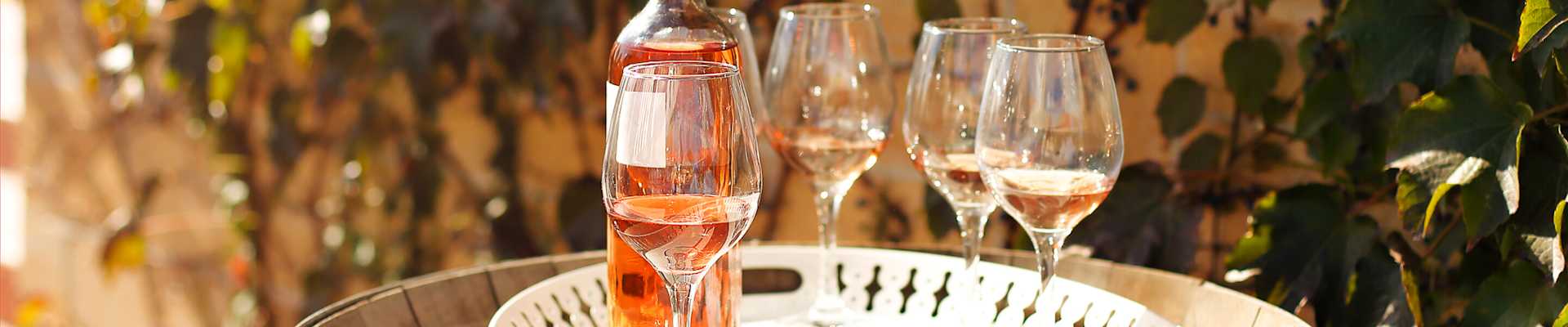
Whether it’s playful and fun or savory and serious, most rosé today is not your grandmother’s White Zinfandel, though that category remains strong. Pink wine has recently become quite trendy, and this time around it’s commonly quite dry. Since the pigment in red wines comes from keeping fermenting juice in contact with the grape skins for an extended period, it follows that a pink wine can be made using just a brief period of skin contact—usually just a couple of days. The resulting color depends on grape variety and winemaking style, ranging from pale salmon to deep magenta.

A northern point in France’s far southern Roussillon region, Maury is dominated by steep limestone cliffs and the castle of Queribus, which the French used as a defense outpost against the Spanish until 1659. Today it remains an important symbol of the presence of both cultures in the region.
Though Maury is famous for vins doux naturels (a style of fortified wine), Maury dry red wines are quickly becoming more in vogue and received their own appellation designation in 2011, called Maury Sec. As is the case in most of Roussillon, Grenache plays a key role here. The region’s schist-dominant vineyards, which climb up to 1,300 feet, are excellent for the production of Grenache of all styles.
For Maury dry red wines, Carignan, Mourvèdre and Syrah act as blending partners with Granche Noir. In the production of vins doux naturels, Grenache Gris and Blanc play a subsidiary role. The latter are characterized using the same terminology as that in Riveslates with those named as grenat or tuilé based on Grenache Noir and those described as ambré or blanc containing more Grenache Blanc and Grenache Gris.