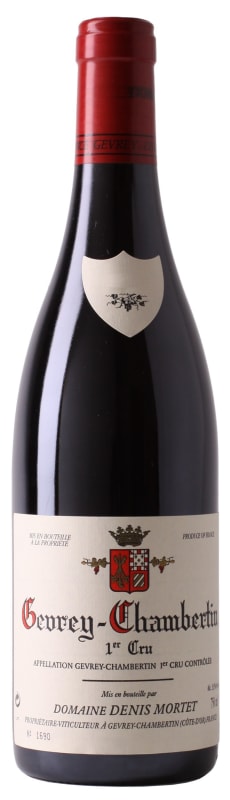


Winemaker Notes
The exceptional positions of these three specifically named vine plots, standing very near to Clos de Bèze in the background, make it undoubtedly the most charming of the Gevrey-Chambertin first growths of the estate. Behind its purity, we are instantly charmed by its fresh fruit, velvety smooth tannin and delicious texture.
Professional Ratings
-
Decanter
Produced with grapes from three different Gevrey-Chambertin Premiers Crus - Petite Chapelle, Cherbaudes and Bel Air - none of which is large enough to make a sizeable cuvée on its own chez Mortet, this is always one of the domaine's best value wines. Harmonious and well balanced, with sappy, savoury fruit, scented 50% new oak and the graceful, lacy tannins that are typical of Arnaud Mortet's winemaking.
-
Robert Parker's Wine Advocate
As usual, Mortet blended his holdings in Petite Chapelle, Cherbaudes and Bel-Air to produce the 2018 Gevrey-Chambertin 1er Cru, a fine bottling in the making, exhibiting aromas of red berries, forest floor, orange rind and black truffle. On the palate, it's medium to full-bodied, elegant and integrated, with powdery tannins and a lively core of fruit.
Barrel Sample: 92-94


Thin-skinned, finicky and temperamental, Pinot Noir is also one of the most rewarding grapes to grow and remains a labor of love for some of the greatest vignerons in Burgundy. Fairly adaptable but highly reflective of the environment in which it is grown, Pinot Noir prefers a cool climate and requires low yields to achieve high quality. Outside of France, outstanding examples come from in Oregon, California and throughout specific locations in wine-producing world. Somm Secret—André Tchelistcheff, California’s most influential post-Prohibition winemaker decidedly stayed away from the grape, claiming “God made Cabernet. The Devil made Pinot Noir.”

This small village is home to the Grands Crus in the farthest northerly stretches of Côte de Nuits and is famous for some of the deepest and firmest Burgundian Pinot Noir.
Gevrey boasts nine Grands Crus, the best of which are arguably Le Chambertin and Chambertin-Clos de Bèze. As with all of the fragmented vineyards of Burgundy, it isn’t easy to differentiate between the two, which are situated adjacent with Clos de Bèze slightly further up the hill than Le Chambertin. Clos de Bèze has a shallower soil and if you’re really counting, may produce wines less intense but more likely to charm. Some compare Le Chambertin in both power and plentitude only to the prized Romanée-Conti Grand Cru farther south in Vosne-Romanée.
Two other Grands Crus vineyards, Mazis-Chambertin (also written Mazy-) and Latricières-Chambertin command almost as much regard as Le Chambertin and Chambertin-Clos de Bèze. The upper part of Mazy, called Les Mazis Haut is the best and Latricières-Chambertin offers an abundance of juicy fruit and a silky texture in the warmer vintages.
Other Grands Crus are Ruchottes-Chambertin, Charmes-Chambertin, Mazoyères-Chambertin, Griotte-Chambertin and Chapelle-Chambertin.
The most respected Pinot Noir wines from Gevrey-Chambertin are robust and powerful but at the same time, velvety and expressive: black fruit, black liquorice and chocolate come into play. After some time in the bottle, the wines are harmonious with bright and sometimes candied fruit, and aromas of musk, truffle and forest floor. These have staying power.