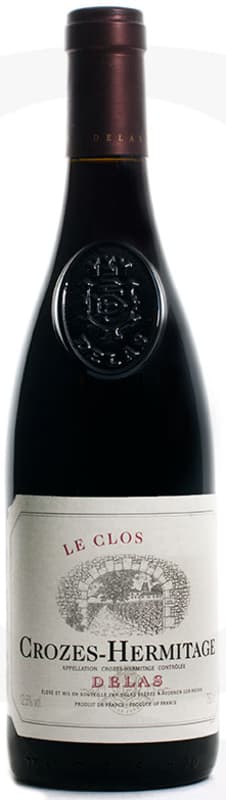


Winemaker Notes
Professional Ratings
-
Robert Parker's Wine Advocate
Jeb Dunnuck Issue Date 30th Dec 2016 Source 228, The Wine Advocate There are three Crozes Hermitage releases in 2015, all of which are noteworthy. A much smaller production cuvée, the 2015 Crozes Hermitage Le Clos comes the Les Saviots lieu-dit and four smaller, old-vine parcels. Completely destemmed and aged in 30% new French oak, its inky purple color is followed by killer notes of black raspberries, new saddle leather, peppery herbs and licorice. Rich, full-bodied, layered and seamless on the palate, with a gorgeous texture and polished tannin, it's up there with the crème de la crème of Crozes.
Range:94-94 -
Wine Spectator
This pretty wine sports a pure, enticing beam of cassis and crushed plum fruit flavors. Silky but persistent, dense but defined, ending with violet, iron and anise accents on the finish. Drink now through 2027.
-
James Suckling
More savory, more brooding, darker minerally aromas with dark plum fruits and spicy, toasty oak, too. The palate has an extremely punchy delivery of flavorsome, dark plum fruits. Appealingly ripe and drenched in flavor. Drink now.






Marked by an unmistakable deep purple hue and savory aromatics, Syrah makes an intense, powerful and often age-worthy red. Native to the Northern Rhône, Syrah achieves its maximum potential in the steep village of Hermitage and plays an important component in the Red Rhône Blends of the south, adding color and structure to Grenache and Mourvèdre. Syrah is the most widely planted grape of Australia and is important in California and Washington. Sommelier Secret—Such a synergy these three create together, the Grenache, Syrah, Mourvedre trio often takes on the shorthand term, “GSM.”

A long and narrow valley producing flavorful red, white, and rosé wines, the Rhône is bisected by the river of the same name and split into two distinct sub-regions—north and south. While a handful of grape varieties span the entire length of the Rhône valley, there are significant differences between the two zones in climate and geography as well as the style and quantity of Rhône wines produced. The Northern Rhône, with its continental climate and steep hillside vineyards, is responsible for a mere 5% or less of the greater region’s total output. The Southern Rhône has a much more Mediterranean climate, the aggressive, chilly Mistral wind and plentiful fragrant wild herbs known collectively as ‘garrigue.’
In the Northern Rhône, the only permitted red variety is Syrah, which in the appellations of St.-Joseph, Crozes-Hermitage, Hermitage, Cornas and Côte-Rôtie, it produces velvety black-fruit driven, savory, peppery red wines often with telltale notes of olive, game and smoke. Full-bodied, perfumed whites are made from Viognier in Condrieu and Château-Grillet, while elsewhere only Marsanne and Roussanne are used, with the former providing body and texture and the latter lending nervy acidity. The wines of the Southern Rhône are typically blends, with the reds often based on Grenache and balanced by Syrah, Mourvèdre, and an assortment of other varieties. All three northern white varieties are used here, as well as Grenache Blanc, Clairette, Bourbelenc and more. The best known sub-regions of the Southern Rhône are the reliable, wallet-friendly Côtes du Rhône and the esteemed Châteauneuf-du-Pape. Others include Gigondas, Vacqueyras and the rosé-only appellation Tavel.