

Winemaker Notes
Rich aromas of cassis and spice with intense licorice and blackberry flavors on the palate and fine, lingering tannins.
Professional Ratings
-
Robert Parker's Wine Advocate
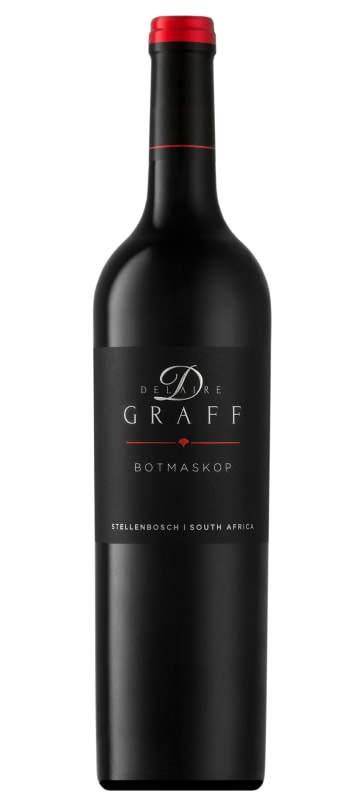
The 2020 Botmaskop, composed of 66% Cabernet Sauvignon, 15% Cabernet Franc, 9% Petit Verdot, 7% Merlot and 3% Malbec, presents a tannic and dusty profile with vibrant notes of black plum and dark cherry. It also features hints of herbs, oak, pencil lead and graphite, adding to its complexity. Medium to full-bodied, the wine is tannic and fresh but could benefit from another year to settle, enhancing its integration. It will pair well with food, especially as it develops further, offering hints of red pepper skin, dusty herbal flowers and red fruit reminiscent of an Entre-deux-Mers Bordeaux wine. Fine-grained tannins contribute to its structure. This blend underwent 70% whole-berry fermentation and was matured in 40% new French oak barrels for 18 months. It promises good aging potential.
-
Wine Spectator
A sleek red, with creamy tannins defining dark, juicy boysenberry and black currant fruit that shows good length. Accents of cigar box spices, tobacco and graphite linger on the finish. Cabernet Sauvignon, Cabernet Franc, Petit Verdot, Merlot and Malbec. Drink now through 2030. 3,500 cases made, 400 cases imported.


One of the world’s most classic and popular styles of red wine, Bordeaux-inspired blends have spread from their homeland in France to nearly every corner of the New World. Typically based on either Cabernet Sauvignon or Merlot and supported by Cabernet Franc, Malbec and Petit Verdot, the best of these are densely hued, fragrant, full of fruit and boast a structure that begs for cellar time. Somm Secret—Blends from Bordeaux are generally earthier compared to those from the New World, which tend to be fruit-dominant.

South Africa’s most famous wine-producing district, Stellenbosch, surrounds the historic town with the same name; fine winemaking here dates back to the late 1600s. Its valleys of granite, sandstone and alluvial loam soils between the towering blue-grey mountains of Stellenbosch, Simonsberg and Helderberg have the capacity to produce beautiful wines from many varieties. The climate is warm Mediterranean, tempered by the cool Atlantic air of nearby False Bay.
Perhaps most well-known for its Pinotage and Bordeaux blends, Stellenbosch also produces noteworthy wines from Syrah, Chenin blanc, Chardonnay and Sauvignon blanc. The district’s wards—Banghoek, Bottelary, Devon Valley, Jonkershoek Valley, Papegaaiberg, Polkadraai Hills and Simonsberg-Stellenbosch—all produce distinctive wines from vines with relatively low yields.