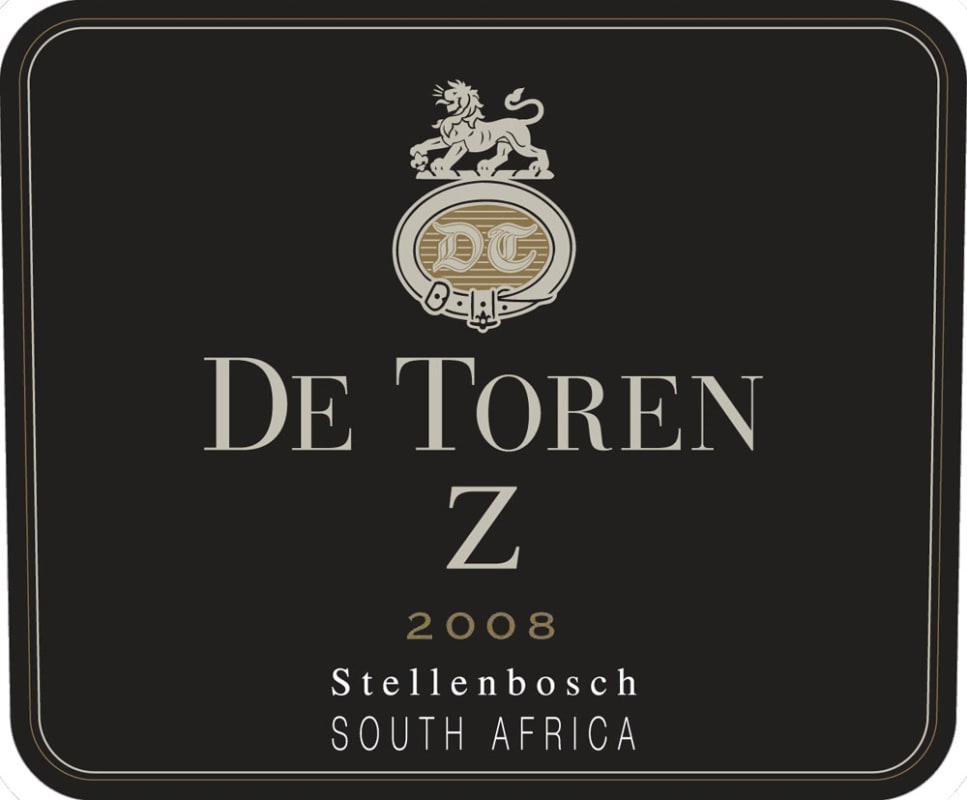

Winemaker Notes
45% Merlot, 27% Cabernet Sauvignon, 15% Malbec, 7% Cabernet Franc, 6% Petit Verdot.
: This sophisticated "Right Bank"-styled Bordeaux blend debuted in the 2004 vintage as a complement to De Toren's legendary "Left Bank"-styled Fusion V. A higher proportion of Merlot makes this delicious red softer and more approachable in its youth than its blockbuster sibling. It delivers intense aromas and flavors of plum, dark berries, and spicebox with classic notes of tobacco, graphite, and leather.
Professional Ratings
-
Robert Parker's Wine Advocate
Juicy, bright and with a plummy frame, the 2008 Z is fresh and complex with notes of dusty purple blossoms and sakura. Medium to full-bodied, the wine unfolds to reveal fresh, lively, elegant fruit tones that sway with notes of spice and oak flavors before ending with a refined and complex finish. Decant for at least 30 minutes.
-
Wine Enthusiast
Cocoa-dusted black cherry and berry aromas hit you first in the bouquet, followed by soft notes of black tea, violets and licorice shortly after. Full and rich in the mouth, the fruit is intense and juicy, framed by a lush but firm structure and balanced acidity hinting at the life that this wine still has to come. Long finish with a peppery back note.
-
Wine Spectator
Ripe and focused, displaying delightful plum and blackberry notes laced with hints of herb and dark licorice. The supple, lengthy finish relies on acidity more than toast or muscle. Well put together. Merlot, Cabernet Sauvignon, Malbec, Cabernet Franc and Petit Verdot. Drink now.


One of the world’s most classic and popular styles of red wine, Bordeaux-inspired blends have spread from their homeland in France to nearly every corner of the New World. Typically based on either Cabernet Sauvignon or Merlot and supported by Cabernet Franc, Malbec and Petit Verdot, the best of these are densely hued, fragrant, full of fruit and boast a structure that begs for cellar time. Somm Secret—Blends from Bordeaux are generally earthier compared to those from the New World, which tend to be fruit-dominant.

With an important wine renaissance in full swing, impressive red and white bargains abound in South Africa. The country has a particularly long and rich history with winemaking, especially considering its status as part of the “New World.” In the mid-17th century, the lusciously sweet dessert wines of Constantia were highly prized by the European aristocracy. Since then, the South African wine industry has experienced some setbacks due to the phylloxera infestation of the late 1800s and political difficulties throughout the following century.
Today, however, South Africa is increasingly responsible for high-demand, high-quality wines—a blessing to put the country back on the international wine map. Wine production is mainly situated around Cape Town, where the climate is generally warm to hot. But the Benguela Current from Antarctica provides brisk ocean breezes necessary for steady ripening of grapes. Similarly, cooler, high-elevation vineyard sites throughout South Africa offer similar, favorable growing conditions.
South Africa’s wine zones are divided into region, then smaller districts and finally wards, but the country’s wine styles are differentiated more by grape variety than by region. Pinotage, a cross between Pinot Noir and Cinsault, is the country’s “signature” grape, responsible for red-fruit-driven, spicy, earthy reds. When Pinotage is blended with other red varieties, like Cabernet Sauvignon, Merlot, Syrah or Pinot Noir (all commonly vinified alone as well), it is often labeled as a “Cape Blend.” Chenin Blanc (locally known as “Steen”) dominates white wine production, with Chardonnay and Sauvignon Blanc following close behind.