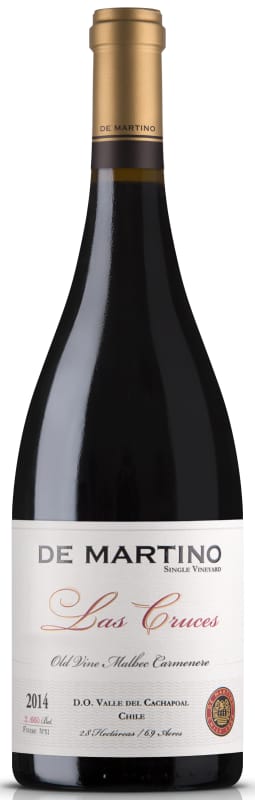


Winemaker Notes
Professional Ratings
-
Wine & Spirits
This red comes from a vineyard in Pichidegua planted in 1955 to malbec (75 percent) and carménère (25 percent), the blend reflecting those percentages precisely. It is dark and dense and, at the same time, voluptuous and round. While it’s brightened by red fruit and some nicely pungent acidity, the wine feels profound and layered. It’s a generous red for your favorite steak house.
-
James Suckling
A juicy and fruity wine with dark berry and cherry aromas and flavors. Vanilla undertones. Full to medium body, round and soft tannins and a flavorful finish. A blend of malbec and carmenere. Better in a year or two. Always delicious.
-
Robert Parker's Wine Advocate
The Malbec-based red blend 2014 Old Bush Vines Las Cruces is sourced from a 2.8-hectare plot in Cachapoal. The vines were planted in 1957 in the village of Pichidegua on granitic soils, with approximately 75% Malbec and the rest Carmenere. Here the aim is to show the floral side of Malbec through moderate alcohol and no makeup from oak. They consider this the northern limit of dry-farming: it's some 150 kilometers south of Santiago, close to Peumo. This is one of their own, organically-farmed vineyards. The wine matured in 5,000-liter oak foudres for 30 months before it was bottled. There are notes of Mediterranean herbs and dry flowers. The palate is medium-bodied with some fine tannins and good balance, with the harmonious style that is very much the house style.


With hundreds of red grape varieties to choose from, winemakers have the freedom to create a virtually endless assortment of blended red wines. In many European regions, strict laws are in place determining the set of varieties that may be used, but in the New World, experimentation is permitted and encouraged resulting in a wide variety of red wine styles. Blending can be utilized to enhance balance or create complexity, lending different layers of flavors and aromas. For example, a red wine blend variety that creates a fruity and full-bodied wine would do well combined with one that is naturally high in acidity and tannins. Sometimes small amounts of a particular variety are added to boost color or aromatics. Blending can take place before or after fermentation, with the latter, more popular option giving more control to the winemaker over the final qualities of the wine.
How to Serve Red Wine
A common piece of advice is to serve red wine at “room temperature,” but this suggestion is imprecise. After all, room temperature in January is likely to be quite different than in August, even considering the possible effect of central heating and air conditioning systems. The proper temperature to aim for is 55° F to 60° F for lighter-bodied reds and 60° F to 65° F for fuller-bodied wines.
How Long Does Red Wine Last?
Once opened and re-corked, a bottle stored in a cool, dark environment (like your fridge) will stay fresh and nicely drinkable for a day or two. There are products available that can extend that period by a couple of days. As for unopened bottles, optimal storage means keeping them on their sides in a moderately humid environment at about 57° F. Red wines stored in this manner will stay good – and possibly improve – for anywhere from one year to multiple decades. Assessing how long to hold on to a bottle is a complicated science. If you are planning long-term storage of your reds, seek the advice of a wine professional.

Well-regarded for intense and exceptionally high quality red wines, the Colchagua Valley is situated in the southern part of Chile’s Rapel Valley, with many of the best vineyards lying in the foothills of the Coastal Range.
Heavy French investment and cutting-edge technology in both the vineyard and the winery has been a boon to the local viticultural industry, which already laid claim to ancient vines and a textbook Mediterranean climate.
The warm, dry growing season in the Colchagua Valley favors robust reds made from Cabernet Sauvignon, Carmenère, Malbec and Syrah—in fact, some of Chile’s very best are made here. A small amount of good white wine is produced from Chardonnay and Sauvignon Blanc.