

Winemaker Notes
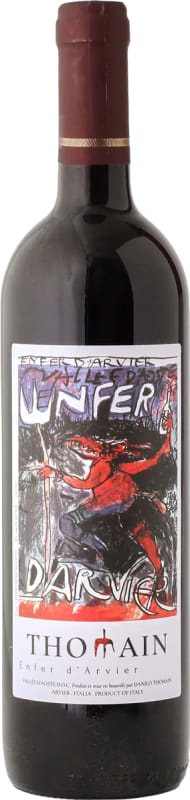
The vineyards of the Enfer d'Arvier appellation are situated in an amphitheater-shaped site on steep slopes in a high-altitude valley, which receives ample sun. The shape of this "bowl" of vineyards effectively concentrates the heat of the sun, thus giving birth to the "hell of Arvier" moniker. Danilo Thomain is the only independent vigneron working this tiny appellation only five hectares in size. The Thomain family works one hectare of vineyards here in the shadow of Mont Blanc. A traditional wine made from the Petit Rouge grape and vinified in cuve, it has a compelling rusticity with a wild berry impression and a lively freshness on the palate.


Beyond the usual suspects, there are hundreds of red grape varieties grown throughout the world. Some are indigenous specialties capable of producing excellent single varietal wines, while others are better suited for use as blending grapes. Each has its own distinct viticultural characteristics, as well as aroma and flavor profiles, offering much to be discovered by the curious wine lover. In particular, Portugal and Italy are known for having a multitude of unique varieties but they can really be found in any region.

Claiming an impressive list of autochthonous varieties, Valle d'Aosta is a long, narrow valley, formed by Italy’s extreme northwestern Alps. The region, a natural gateway between Italy and France, is also home to many grape migrants from France and its more southerly Italian neighbors. Not surprisingly, wine labels are often written in Italian and French.
The main whites here include: Petite Arvine and Prié blanc (Blanc de Morgex). For reds: Fumin, Cornalin, Mayolet, Petit Rouge, Premetta, Vuillermin, Neblou, and Vien de Nus are unique to the region. French ones that do well are Gamay noir, Pinot noir, Chardonnay and Pinot gris (confusingly called Malvoisie in Aosta but it is not related to Malvasia). Italian grapes common here include Moscato, Dolcetto, Barbera, Nebbiolo, and from farther away, Ciliegiolo.