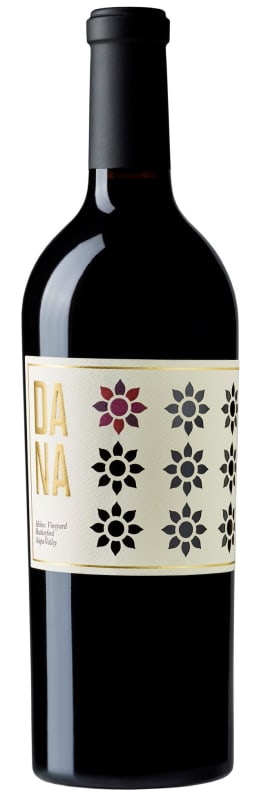


Winemaker Notes
Professional Ratings
-
James Suckling
Perfect aromas of crushed berries, cedar, roses and blackberries. Touch of rose leaf. Medium body, very fine tannins and nuanced flavors. Lovely, complex finish. Wonderful elegance and length. Drinkable now, but better in two or three years.
-
Jeb Dunnuck
From vines planted around the estate in Rutherford, the 2017 Cabernet Sauvignon Helms Vineyard sports a deep purple hue as well as gorgeous notes of blackcurrants, tobacco, crushed rock-like minerality, lead pencil, and forest floor. Just pure, unadulterated Cabernet Sauvignon on both the nose and palate, it has a Chateau Lafite-like elegance and minerality as well as its hallmark lead pencil character, medium to full-bodied richness, beautiful balance, and a great finish. It's bigger and richer than the Lotus Vineyard Cabernet, yet its balance, purity, and elegance stand out just as much. It will offer pleasure for 30 years or more.
-
Robert Parker's Wine Advocate
Helms vineyard consists of five acres on gravelly loam, right on the northern edge of the Rutherford bench, planted in 1997 and 1998. The 2017 Cabernet Sauvignon Helms Vineyard has a deep garnet-purple color and slips seductively out of the glass with compelling scents of blackberry pie, baked black cherries and warm cassis with hints of raspberry leaves, tilled black loam, truffles and tar. The full-bodied palate is satisfyingly rich and plush, yet it has a fantastic backbone of freshness lifting all the opulent fruit to a long, lively, mineral-tinged finish. 254 cases were made.


A noble variety bestowed with both power and concentration, Cabernet Sauvignon enjoys success all over the globe, its best examples showing potential to age beautifully for decades. Cabernet Sauvignon flourishes in Bordeaux's Medoc where it is often blended with Merlot and smaller amounts of some combination of Cabernet Franc, Malbecand Petit Verdot. In the Napa Valley, ‘Cab’ is responsible for some of the world’s most prestigious, age-worthy and sought-after “cult” wines. Somm Secret—DNA profiling in 1997 revealed that Cabernet Sauvignon was born from a spontaneous crossing of Cabernet Franc and Sauvignon Blanc in 17th century southwest France.

The Rutherford sub-region of Napa Valley centers on the town of Rutherford and covers some of Napa Valley’s finest vineyard real estate, spanning from the Mayacamas in the west, to the Vaca Mountains on the other side of the valley.
Inside of the Rutherford AVA, bordering the Mayacamas, is a stretch of uplands called the Rutherford Bench. (These bench lands technically run the length of Oakville as well). Mountain runoff creates deep, well-drained, alluvial soils on the bench, giving vine roots plenty of reason to permeate deep into the ground. The result is wine with great structure and complexity.
Rutherford Cabernet Sauvingons and Bordeaux Blends garner substantial attention for their enticing fragrances of dusty earth and dried herbs, broad and juicy mid-palates and lush and fine-grained tannins. The sub-appellation claims some of the valley’s most prized vineyards today, namely Caymus, Rubicon and Beckstoffer Georges III.
It is also home to Napa’s most influential and historic personalities. Thomas Rutherford, responsible for the appellation's name, made serious investments here in grape growing and wine production between the years of 1850 to 1880. Gustave Niebaum purchased a large swath of land and completed his winery in 1887, calling it “Inglenook.” Today this remains the oldest bonded winery in California. Georges Latour founded Beaulieu Vineyard in 1900, making it the oldest continuous winery in the state. Latour also hired the famous enologist, André Tchelistcheff, a man credited for single-handedly defining the modern Napa winemaking style.