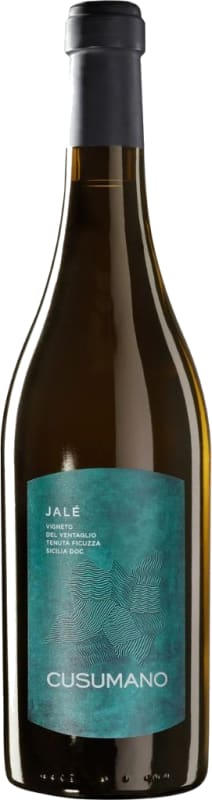


Winemaker Notes
Bright yellow with subtle green notes. Bold flavors of pineapple and guava fruits are refreshing to the palate with hints of basil cream sauce.
Enjoy this refreshing wine with white-sauce pastas.
Professional Ratings
-
James Suckling
This has aromas of mango stone, dried pineapple, lemon and grilled herbs. It’s medium-bodied with a compact, lightly oily palate. Lots of exotic fruit. Chardonnay.
-
Wine Enthusiast
Aromas of seaweed and tahini dance up against mixed citrus and tropical fruits that are fully realized on the palate in the form of lemon peel, dried pineapple and star fruit. Acid and heat are in balance against the round creaminess that carries through a lengthy finish.
-
Robert Parker's Wine Advocate
Made with oak-fermented Chardonnay from the Vigneto del Ventaglio Tenuta Ficuzza property, the 2020 Sicilia Jalé opens to an off-gold color and saturated aromas of honey, apricot and dried sage. The wine is soft and silky with a supple, medium-bodied approach. This vintage doesn't have the spicy zest of past releases, but the freshness is good. The 2020 vintage puts more emphasis on textural richness.


One of the most popular and versatile white wine grapes, Chardonnay offers a wide range of flavors and styles depending on where it is grown and how it is made. While it tends to flourish in most environments, Chardonnay from its Burgundian homeland produces some of the most remarkable and longest lived examples. California produces both oaky, buttery styles and leaner, European-inspired wines. Somm Secret—The Burgundian subregion of Chablis, while typically using older oak barrels, produces a bright style similar to the unoaked style. Anyone who doesn't like oaky Chardonnay would likely enjoy Chablis.

A large, geographically and climatically diverse island, just off the toe of Italy, Sicily has long been recognized for its fortified Marsala wines. But it is also a wonderful source of diverse, high quality red and white wines. Steadily increasing in popularity over the past few decades, Italy’s fourth largest wine-producing region is finally receiving the accolades it deserves and shining in today's global market.
Though most think of the climate here as simply hot and dry, variations on this sun-drenched island range from cool Mediterranean along the coastlines to more extreme in its inland zones. Of particular note are the various microclimates of Europe's largest volcano, Mount Etna, where vineyards grow on drastically steep hillsides and varying aspects to the Ionian Sea. The more noteworthy red and white Sicilian wines that come from the volcanic soils of Mount Etna include Nerello Mascalese and Nerello Cappuccio (reds) and Carricante (whites). All share a racy streak of minerality and, at their best, bear resemblance to their respective red and white Burgundies.
Nero d’Avola is the most widely planted red variety, and is great either as single varietal bottling or in blends with other indigenous varieties or even with international ones. For example, Nero d'Avola is blended with the lighter and floral, Frappato grape, to create the elegant, Cerasuolo di Vittoria, one of the more traditional and respected Sicilian wines of the island.
Grillo and Inzolia, the grapes of Marsala, are also used to produce aromatic, crisp dry Sicilian white. Pantelleria, a subtropical island belonging to the province of Sicily, specializes in Moscato di Pantelleria, made from the variety locally known as Zibibbo.