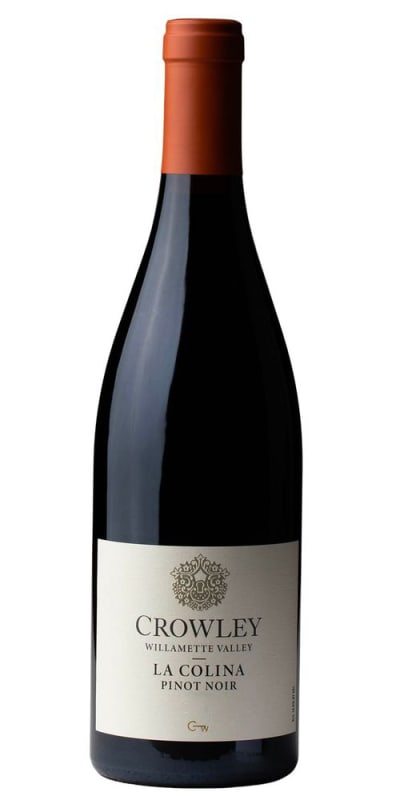


Winemaker Notes
Glowing bright red core surrounded by a vibrant magenta and fuchsia edge. Deep aromas of delicate maple candy, raspberry, red currant, red plum, dried hibiscus flower, orange, and apricot mingle with spearmint, potting soil, and graphite. Maple of the nose emerges on the palate alongside cherry hard candy, baker's chocolate, purple basil, and kefir grain. These elements weave together perfectly with pristine balance. An excellent food wine with striking composure, approachability, and authenticity, showing why La Colina is near and dear to our hearts.
Professional Ratings
-
Decanter
The La Colina site was planted in 1999 in the Dundee Hills, completely to Pinot Noir, with a mix of clones. Aromas of violets, earth, and sweet berries show as a very elegant nose; the palate brings an array of delicious fleshy strawberries, chopped mint and clove spice. A Dundee Hills classic with fruit and refinement brought by winemaker Tyson Crowley.
-
Vinous
The 2023 Pinot Noir La Colina is attractively earthy in the glass, as dusty soil tones and flowery underbrush give way to wild herbs and dried strawberries. It is racy and sleek, with juicy acidity and vibrant wildberry fruits swirling throughout. Licorice lingers under an air of cola as the 2023 tapers off long yet pure and clean. A total pleasure to taste.


Thin-skinned, finicky and temperamental, Pinot Noir is also one of the most rewarding grapes to grow and remains a labor of love for some of the greatest vignerons in Burgundy. Fairly adaptable but highly reflective of the environment in which it is grown, Pinot Noir prefers a cool climate and requires low yields to achieve high quality. Outside of France, outstanding examples come from in Oregon, California and throughout specific locations in wine-producing world. Somm Secret—André Tchelistcheff, California’s most influential post-Prohibition winemaker decidedly stayed away from the grape, claiming “God made Cabernet. The Devil made Pinot Noir.”

Home of the first Pinot noir vineyard of the Willamette Valley, planted by David Lett of Eyrie Vineyard in 1966, today the Dundee Hills AVA remains the most densely planted AVA in the valley (and state). To its north sits the Chehalem Valley and to its south, runs the Willamette River. Within the region’s 12,500 acres, about 1,700 are planted to vine on predominantly basalt-based, volcanic, Jory soil.