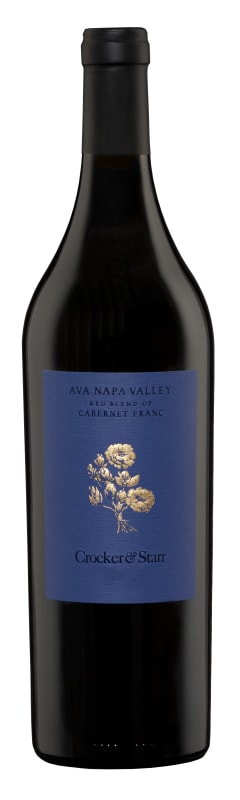


Winemaker Notes
Professional Ratings
-
Jeb Dunnuck
The 2021 Cabernet Franc A.V.A Red Blend checks in as 54% Cabernet Franc, 35% Cabernet Sauvignon, and the balance Malbec that was aged 22 months in barrel. Spiced red plums, black cherries, damp flowers, and leather are just some of the nuances in this puppy, and it's medium to full-bodied, with a ripe, forward, charming style that's already hard to resist. I wouldn't push the aging curve, but I see no reason this shouldn't evolve gracefully for 8-10 years.
-
Vinous
The 2021 Red Blend of Cabernet Franc (Napa Valley) is 54% Cabernet Franc, 35% Cabernet Sauvignon and 11% Malbec. Bright, effusive aromatics meld into a core of black fruits, licorice, lavender and chocolate. Polished tannins wrap it all together in style.
-
Robert Parker's Wine Advocate
Crocker and Starr's 2021 A.V.A. Napa Valley Blend of Cabernet Franc is an assemblage of 54% Cabernet Franc, 35% Cabernet Sauvignon and 11% Malbec, all from St. Helena. Marked by scents of mocha, deep loamy notes, black cherries and hints of tobacco leaf, this full-bodied wine is nicely textured, somewhere between silky and velvety, with ample harmony and length.
-
Wine Spectator
A solid, winey offering, with a restrained edge to its mix of gently mulled black cherry and black currant fruit, infused with tobacco, leather and Kenya AA coffee hints. Shows a burnished feel on the finish. Cabernet Franc, Cabernet Sauvignon and Malbec. Drink now through 2031.


One of the world’s most classic and popular styles of red wine, Bordeaux-inspired blends have spread from their homeland in France to nearly every corner of the New World. Typically based on either Cabernet Sauvignon or Merlot and supported by Cabernet Franc, Malbec and Petit Verdot, the best of these are densely hued, fragrant, full of fruit and boast a structure that begs for cellar time. Somm Secret—Blends from Bordeaux are generally earthier compared to those from the New World, which tend to be fruit-dominant.

St. Helena is in the heart of the Napa Valley, nestled between Calistoga to the north and Rutherford on its southern border. On its western side, the Mayacamas Mountains guard it from the cooling effects of the Pacific Ocean; to its east stand the Vaca Mountains. In conjunction, these mountain ranges serve to lock in summer daytime heat. But in the evening, cool air from the San Pablo Bay funnels up through the valley, creating very chilly nights. It isn’t uncommon for temperatures to drop 50 degrees, a shift that promotes a balance of sugar ripeness and acidity in wine grapes.
St. Helena contains a plethora of different soil types in a small area, which have been enhanced over centuries by rain runoff from both mountain ranges. Its vineyards cover a variety of terrain, spreading across the bucolic valley floor and its benchlands.
These ideal topographic and climatic growing conditions easily caught the attention of early winemaking pioneers. In fact, St. Helena is the birthplace of Napa Valley’s commercial wine industry. Dr. Crane founded his cellar in 1859, David Fulton in 1860 and Charles Krug in 1861.
Today there are no less than 400 separate vineyards planted within the 12,000 acres that make up the St. Helena appellation.
Revered most for its red wines based on Bordeaux varieties, namely Cabernet Sauvignon, the St. Helena appellation is also a source of superior Syrah, Zinfandel and Sauvignon blanc.