

Winemaker Notes
Much like 2018, the 2019 vintage was one of the driest winters and springs ever on record. Beginning with some of the coldest weather they've had in years and lasting through March, the vintage eventually transitioned into a relatively moderate growing season, with bud break occurring near our long0term average of the fist two weeks of April, and bloom the first two weeks of June. Unusual rainfall during the summer, when they're historically experiencing drought conditions, was welcomed during such a dry year, even though it can create farming challenges. Cristom learned a great deal from the 2018 season, the driest on record, equipping them to better preserve small berries in the clusters without desiccation. Slight rains during harvest delayed the vintage slightly, but the rewards went to those who waited out the storms until dry weather the first week of October.
Professional Ratings
-
Robert Parker's Wine Advocate
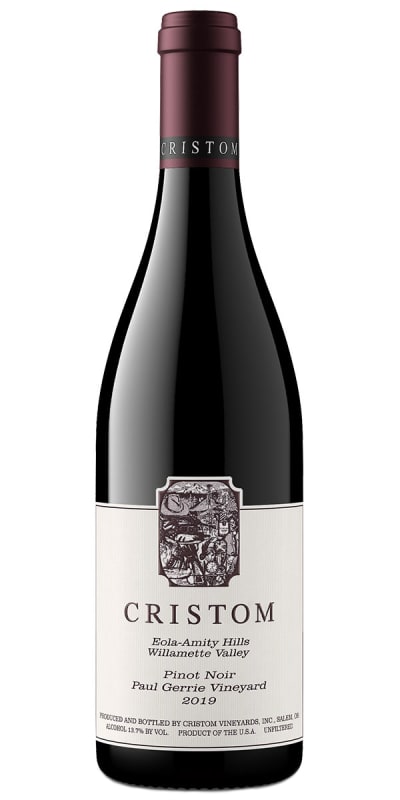
Paul Gerrie is the newest vineyard at Cristom, planted from 2016–2019; it's 28 acres of mostly Pinot Noir and smaller portions of Chardonnay and Gamay. The 2019 Pinot Noir Paul Gerrie Vineyard combines power and precision. It opens with a pleasant touch of sweet balsamic, with Morello cherries, bergamot and loamy earth. The medium-bodied palate is surprisingly intense, all that powerful fruit accented by swirls of savory and spicy nuance. It flows through the mouth with a silky, weightless texture and finishes very long and layered.
-
James Suckling
A perfumed nose of violets, wild raspberries, lemon zest, red tea, cinnamon stick and crushed stones. It’s medium-bodied with sleek, seamless tannins and fresh acidity. Very fine and precise. Minerals and gently bitter tea notes on the finish.
-
Wine Enthusiast
This expressive cuvée captures the ebullience of wine made from young vines. Tangerine and red plum fruit flavors explode on the palate, with ample acidity and a touch of fresh green herbs. It’s almost Beaujolais-like, with that sort of immediate impact and fruit power


Thin-skinned, finicky and temperamental, Pinot Noir is also one of the most rewarding grapes to grow and remains a labor of love for some of the greatest vignerons in Burgundy. Fairly adaptable but highly reflective of the environment in which it is grown, Pinot Noir prefers a cool climate and requires low yields to achieve high quality. Outside of France, outstanding examples come from in Oregon, California and throughout specific locations in wine-producing world. Somm Secret—André Tchelistcheff, California’s most influential post-Prohibition winemaker decidedly stayed away from the grape, claiming “God made Cabernet. The Devil made Pinot Noir.”

Running north to south, adjacent to the Willamette River, the Eola-Amity Hills AVA has shallow and well-drained soils created from ancient lava flows (called Jory), marine sediments, rocks and alluvial deposits. These soils force vine roots to dig deep, producing small grapes with great concentration.
Like in the McMinnville sub-AVA, cold Pacific air streams in via the Van Duzer Corridor and assists the maintenance of higher acidity in its grapes. This great concentration, combined with marked acidity, give the Eola-Amity Hills wines—namely Pinot noir—their distinct character. While the region covers 40,000 acres, no more than 1,400 acres are covered in vine.