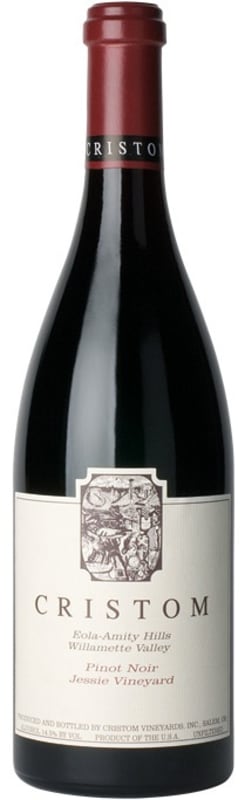


Winemaker Notes
Professional Ratings
-
James Suckling
Aromas of dried strawberries, figs and hints of toffee follow through to a full body, round and velvety tannins and a juicy finish. Drink now.
-
Robert Parker's Wine Advocate
Pale ruby-purple colored, the 2014 Pinot Noir Jessie Vineyard displays a beautiful perfume of violets, lavender and kirsch with suggestions of black raspberries, tilled earth, wild thyme and black pepper. Light to medium-bodied, it fills the mouth with delicate red fruit and earthy layers, framed by firm, grainy tannins, finishing with an herbal lift.
Rating: 92+ -
Wilfred Wong of Wine.com
Fully layered and quite savory, the 2014 Cristom Jessie Vineyard Pinot Noir exhibits all of the nuances of this grape variety. The wine starts out with bright red fruits and quickly goes to perky minerality before settling in for a bit of rusticity in the finish. Serve this ultra-complex wine with braised meats. (Tasted: November 18, 2016, San Francisco, CA)


Thin-skinned, finicky and temperamental, Pinot Noir is also one of the most rewarding grapes to grow and remains a labor of love for some of the greatest vignerons in Burgundy. Fairly adaptable but highly reflective of the environment in which it is grown, Pinot Noir prefers a cool climate and requires low yields to achieve high quality. Outside of France, outstanding examples come from in Oregon, California and throughout specific locations in wine-producing world. Somm Secret—André Tchelistcheff, California’s most influential post-Prohibition winemaker decidedly stayed away from the grape, claiming “God made Cabernet. The Devil made Pinot Noir.”

Running north to south, adjacent to the Willamette River, the Eola-Amity Hills AVA has shallow and well-drained soils created from ancient lava flows (called Jory), marine sediments, rocks and alluvial deposits. These soils force vine roots to dig deep, producing small grapes with great concentration.
Like in the McMinnville sub-AVA, cold Pacific air streams in via the Van Duzer Corridor and assists the maintenance of higher acidity in its grapes. This great concentration, combined with marked acidity, give the Eola-Amity Hills wines—namely Pinot noir—their distinct character. While the region covers 40,000 acres, no more than 1,400 acres are covered in vine.