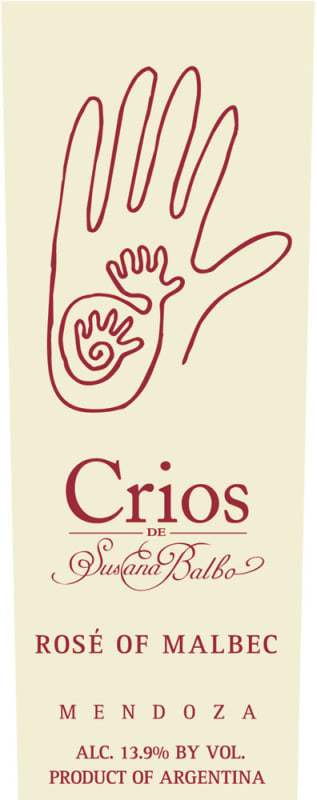

Winemaker Notes


Whether it’s playful and fun or savory and serious, most rosé today is not your grandmother’s White Zinfandel, though that category remains strong. Pink wine has recently become quite trendy, and this time around it’s commonly quite dry. Since the pigment in red wines comes from keeping fermenting juice in contact with the grape skins for an extended period, it follows that a pink wine can be made using just a brief period of skin contact—usually just a couple of days. The resulting color depends on grape variety and winemaking style, ranging from pale salmon to deep magenta.

With vineyards tretching along the eastern side of the Andes Mountains from Patagonia in the south to Salta in the north, Argentina is one of the world’s largest and most dynamic wine producing countries—and most important in South America.
Since the late 20th century vineyard investments, improved winery technology and a commitment to innovation have all contributed to the country’s burgeoning image as a producer of great wines at all price points. The climate here is diverse but generally continental and agreeable, with hot, dry summers and cold snowy winters—a positive, as snow melt from the Andes Mountains is used heavily to irrigate vineyards. Grapes very rarely have any difficulty achieving full ripeness.
Argentina’s famous Mendoza region, responsible for more than 70% of Argentina’s wine production, is further divided into several sub-regions, with Luján de Cuyo and the Uco Valley most noteworthy. Red wines dominate here, especially Malbec, the country’s star variety, while Chardonnay is the most successful white.
The province of San Juan is best known for blends of Bonarda and Syrah. Torrontés is a specialty of the La Rioja and Salta regions, the latter of which is also responsible for excellent Malbecs grown at very high elevation.