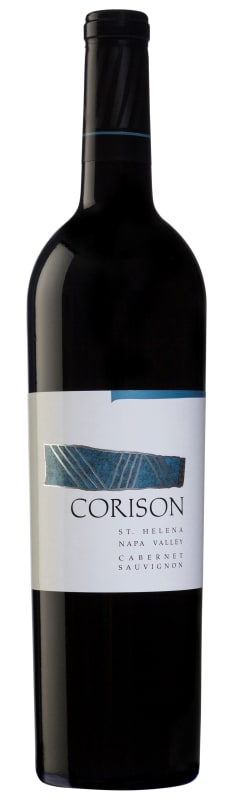


Winemaker Notes
Professional Ratings
-
Wine Enthusiast
Savory and complicated in saline, woody notes of cedar and dry tannin, this old-school wine is dark and structured, aged 20 months in French oak, half of it new. Brooding black fruit and clove give it an edgy richness that is restrained and balanced by underlying acidity. Enjoy best 2029–2039.
Cellar Selection -
Wine & Spirits
The 2019 vintage might be something of an outlier for Cathy Corison, who picked two weeks later than usual, taking advantage of the cool season from summer into fall. This wine is, in fact, an idealized version of her benchland cabernet sauvignon, holding on to the elegance she regularly achieves, while adding a luscious textural beauty that more often comes from bottle age. James Conley of NYC’s Keen’s Chophouse found the aroma suggested a more delicate wine than the density and extract this one carries in its “cabernet grape tannins and intriguing, lifted fruit. If someone said, ‘I love Napa, but show me what I’m missing.’ I’d say, ‘Well, try this.’” Warm and explosive in its energy, this wine carries an imprint of the benchland soils in the play of darkness and light, in the detailed tannins that make you crave another taste
-
James Suckling
A perfumed nose of blackberries, dark cherries, cedar, cocoa and nutmeg. Violets too. Medium body with fine tannins and bright acidity. Fresh and refined with a bright core of wild fruit and a long, flavorful finish. Drink or hold.
-
Wine Spectator
A very fresh, floral-laced style, offering a bright beam of cassis and plum gelée laced with flashes of violet, hibiscus and rose petal. Nicely grounded through the finish, with alder and warm earth hints filling in. Approachable, but this has more to show in time. Best from 2023.
-
Robert Parker's Wine Advocate
Delicate herbal shadings accent the cassis notes on the nose of Corison's 2019 Cabernet Sauvignon. It's classic Corison, balanced and concentrated without being showy or weighty, silky in feel, with a long, lingering finish and two decades of ageability.
-
Jeb Dunnuck
Lots of dark, blackcurrants, cassis, darker chocolate, and hints of violets emerge from the 2019 Cabernet Sauvignon, a medium to full-bodied, beautifully balanced St. Helena Napa Cabernet Sauvignon offering nicely integrated acidity, terrific balance, and a great finish. This quintessential Cathy Corison Cabernet shines on all accounts. It's going to evolve for two decades. Best After 2022


A noble variety bestowed with both power and concentration, Cabernet Sauvignon enjoys success all over the globe, its best examples showing potential to age beautifully for decades. Cabernet Sauvignon flourishes in Bordeaux's Medoc where it is often blended with Merlot and smaller amounts of some combination of Cabernet Franc, Malbecand Petit Verdot. In the Napa Valley, ‘Cab’ is responsible for some of the world’s most prestigious, age-worthy and sought-after “cult” wines. Somm Secret—DNA profiling in 1997 revealed that Cabernet Sauvignon was born from a spontaneous crossing of Cabernet Franc and Sauvignon Blanc in 17th century southwest France.

St. Helena is in the heart of the Napa Valley, nestled between Calistoga to the north and Rutherford on its southern border. On its western side, the Mayacamas Mountains guard it from the cooling effects of the Pacific Ocean; to its east stand the Vaca Mountains. In conjunction, these mountain ranges serve to lock in summer daytime heat. But in the evening, cool air from the San Pablo Bay funnels up through the valley, creating very chilly nights. It isn’t uncommon for temperatures to drop 50 degrees, a shift that promotes a balance of sugar ripeness and acidity in wine grapes.
St. Helena contains a plethora of different soil types in a small area, which have been enhanced over centuries by rain runoff from both mountain ranges. Its vineyards cover a variety of terrain, spreading across the bucolic valley floor and its benchlands.
These ideal topographic and climatic growing conditions easily caught the attention of early winemaking pioneers. In fact, St. Helena is the birthplace of Napa Valley’s commercial wine industry. Dr. Crane founded his cellar in 1859, David Fulton in 1860 and Charles Krug in 1861.
Today there are no less than 400 separate vineyards planted within the 12,000 acres that make up the St. Helena appellation.
Revered most for its red wines based on Bordeaux varieties, namely Cabernet Sauvignon, the St. Helena appellation is also a source of superior Syrah, Zinfandel and Sauvignon blanc.