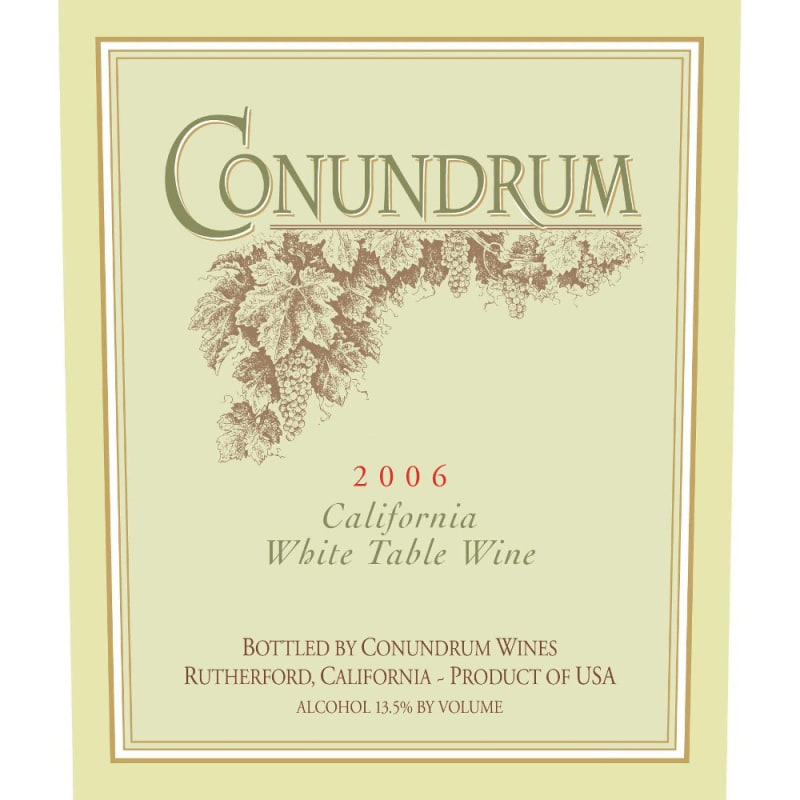

Winemaker Notes
To create the layered flavors that go into the Conundrum blend, Sauvignon Blanc grapes were brought in from the Napa Valley, Muscat Canelli from Tulare County on the Central Coast, and Chardonnay and Viognier from Conundrum's vineyards in Monterey County.
About one quarter of the wine lots were fermented in stainless steel in order to preserve their individual fruit characteristics. The remaining lots were fermented in a combination of new and seasoned oak barrels for up to ten months.
Conundrum 2006 exhibits soft tropical notes of guava and cherimoya, also peach and honeysuckle. The rich perfume is supported by concentrated and focused layers of peach and apricot nectar, pear and green melon with spicy vanilla notes. The creamy texture and balanced acidity carries through the palate for a long finish.
Professional Ratings

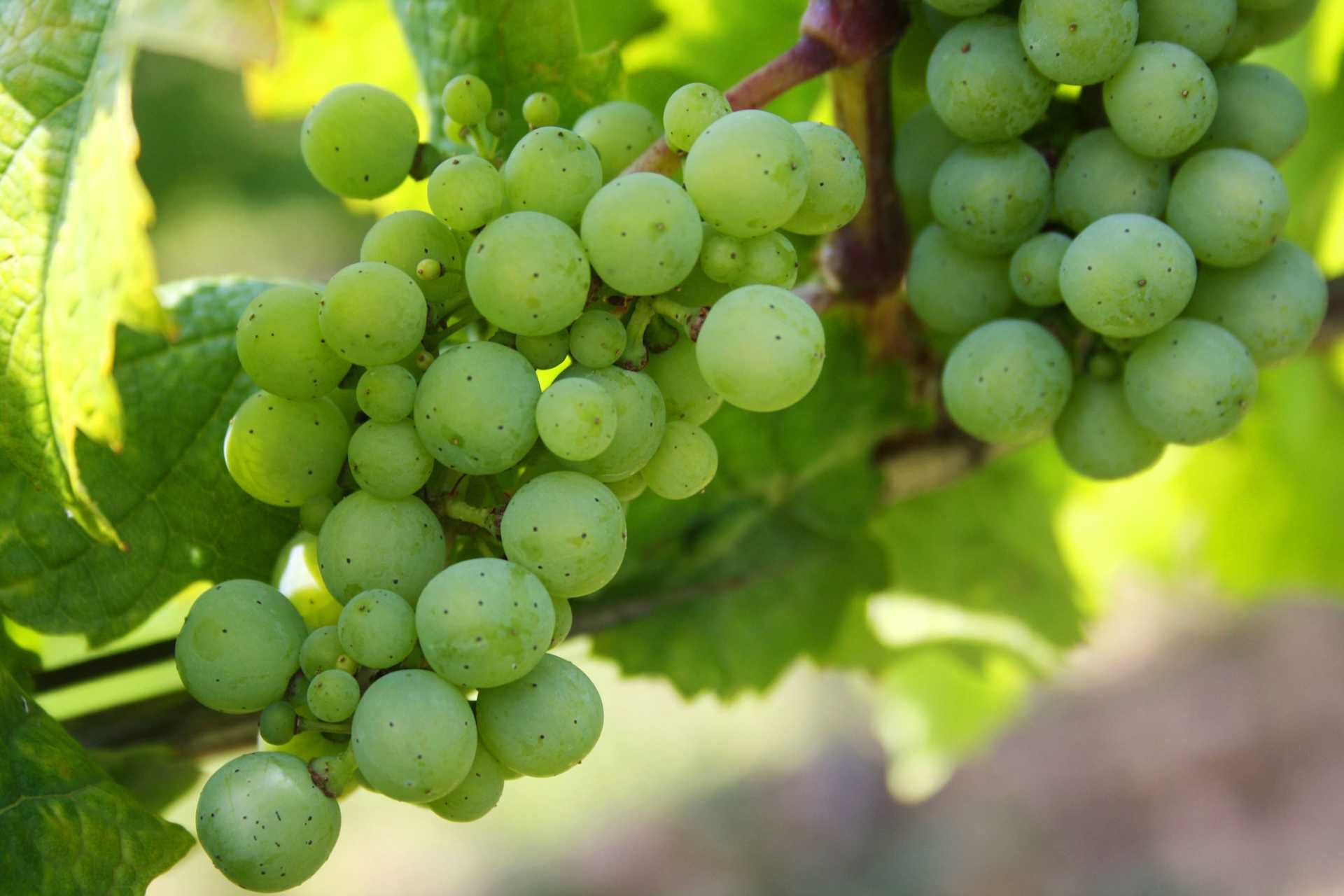
With hundreds of white grape varieties to choose from, winemakers have the freedom to create a virtually endless assortment of blended white wines. In many European regions, strict laws are in place determining the set of varieties that may be used in white wine blends, but in the New World, experimentation is permitted and encouraged. Blending can be utilized to enhance balance or create complexity, lending different layers of flavors and aromas. For example, a variety that creates a soft and full-bodied white wine blend, like Chardonnay, would do well combined with one that is more fragrant and naturally high in acidity. Sometimes small amounts of a particular variety are added to boost color or aromatics. Blending can take place before or after fermentation, with the latter, more popular option giving more control to the winemaker over the final qualities of the wine.

Responsible for the vast majority of American wine production, if California were a country, it would be the world’s fourth largest wine-producing nation. The state’s diverse terrain and microclimates allow for an incredible range of red wine styles, and unlike tradition-bound Europe, experimentation is more than welcome here. California wineries range from tiny, family-owned boutiques to massive corporations, and price and production are equally varied. Plenty of inexpensive bulk wine is made in the Central Valley area, while Napa Valley is responsible for some of the world’s most prestigious and expensive “cult” wines.
Each American Viticultural Area (AVA) and sub-AVA of has its own distinct personality, allowing California to produce red wine of every fashion: from bone dry to unctuously sweet, still to sparkling, light and fresh to rich and full-bodied. In the Napa Valley, Cabernet Sauvignon, Merlot, Chardonnay and Sauvignon Blanc dominate vineyard acreage. Sonoma County is best known for Chardonnay, Pinot Noir, Cabernet Sauvignon, Rosé and Zinfandel. The Central Coast has carved out a niche with Rhône Blends based on Grenache and Syrah, while Mendocino has found success with cool climate varieties such as Pinot noir, Riesling and Gewürztraminer. With all the diversity that California wine has to offer, any wine lover will find something to get excited about here.