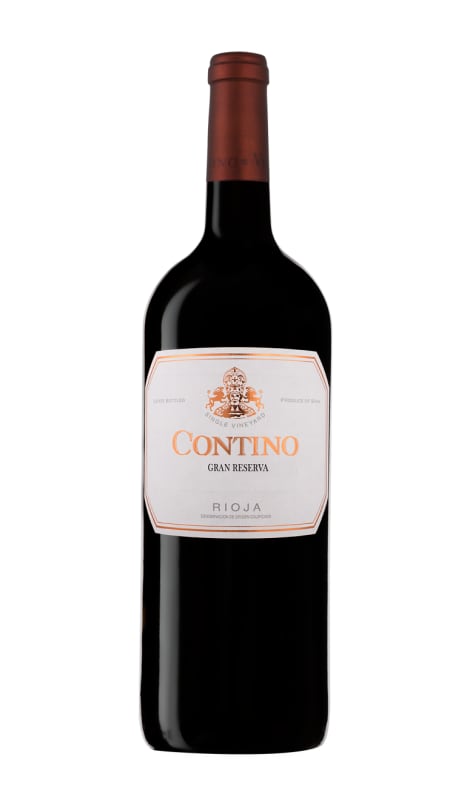


Winemaker Notes
Attractive cherry color, the nose is opulent, intense and very complex with predominant aromas of black and red fruits well integrated with toasted hints from the oak.On the palate, the wine is powerful, polished and well balanced with silky tannins which caress the mouth and are followed by a long finish.
Blend: Tempranillo: 70%, Graciano: 15%, Grenache: 12%, Viura: 3%
Professional Ratings
-
Jeb Dunnuck
Gorgeous notes of red plums, currants, vanilla spice, and candied flowers all emerge from the 2014 Gran Reserva. With full-bodied richness, a rounded, layered texture, plenty of mid-palate depth, and present yet ripe tannins, this beauty does everything right and can be drunk with incredible pleasure any time over the coming 10-15 years. This cuvée is based on 70% Tempranillo and the rest Graciano, Mazuelo, and Garnacha, all fermented and aged in new French and American oak.
-
James Suckling
A very balanced reserva with ultra fine tannins that are melted into the wine. Blueberry and light citrus undertones. Medium to full body, soft and silky tannins and a flavorful finish. Shows light tar and spice in the aftertaste.
-
Robert Parker's Wine Advocate
The more classical 2014 Gran Reserva was produced with a blend of 70% Tempranillo, 15% Graciano, 10% Mazuelo and 5% Garnacha from a super selection of the grapes used for the Reserva. It fermented destemmed in concrete with indigenous yeasts and matured in 225-liter oak barrels, 70% of them French, the rest American, for 24 months. This shows abundant notes of spices, toast and smoke, dark chocolate and espresso coffee and ripe berries. It's still showing the impact of the élevage, but it will probably absorb it with time in bottle. The palate is powerful and reveals abundant tannins.
-
Wine Spectator
This red has a generous, warm character. Cherry and red plum flavors show a sweet preserved fruit accent, while vanilla, spicy and candied orange peel notes add interest. Well-integrated tannins and juicy acidity support the plush texture. Tempranillo, Graciano, Grenache and Viura.
-
Wine & Spirits
This wine’s potent extract gains freshness with air. The fruit turns plummy while the dusty tannins take on the blackness of eggplant skin and the umami richness of mushrooms. Give it a year or two in the cellar to meld, then decant for short ribs.





Contino, the first Rioja château 1973, impelled by CVNE and the owners of the 62-hectare property located in the Rioja Alavesa. The history of the property dates from the 16th century, and is reflected in its name. The “contino” was the officer in charge of a guard corps of a hundred soldiers who protected the royal family "de contino” (continuously) from the times of the Catholic Monarchs onwards. According to the tradition, Saint Gregory, the patron saint of vineyards, passed through the lands of this same Rioja property, giving rise to the use of his figure in the logo of this winery, and to the use of his name for some of the plots now planted with vines. The wine produced on this property, fruity and elegant, is heir to the best Rioja tradition. It is made with an individualised grape harvesting system in which only grapes from the same vineyards that surround the old manor house are used. Their origin in the various plots is noted. The perfect combination of soils, Atlantic-Mediterranean climate and refined technique have made Contino, more than 30 years after the first vintage, a reference product both in and outside Spain. The 62 hectares of Laserna vineyards in Laguardia are protected by the hill called the Cerro de la Mesa, which gives this land a characteristic orientation and mesoclimate. The hand-cut grapes are transported along a short road to the outbuildings so as to avoid damaging their qualities.

Hailed as the star red variety in Spain’s most celebrated wine region, Tempranillo from Rioja, or simply labeled, “Rioja,” produces elegant wines with complex notes of red and black fruit, crushed rock, leather, toast and tobacco, whose best examples are fully capable of decades of improvement in the cellar.
Rioja wines are typically a blend of fruit from its three sub-regions: Rioja Alta, Rioja Alavesa and Rioja Oriental, although specific sub-region (zonas), village (municipios) and vineyard (viñedo singular) wines can now be labeled. Rioja Alta and Alavesa, at the highest elevations, are considered to be the source of the brightest, most elegant fruit, while grapes from the warmer and drier, Rioja Oriental, produce wines with deep color, great body and richness.