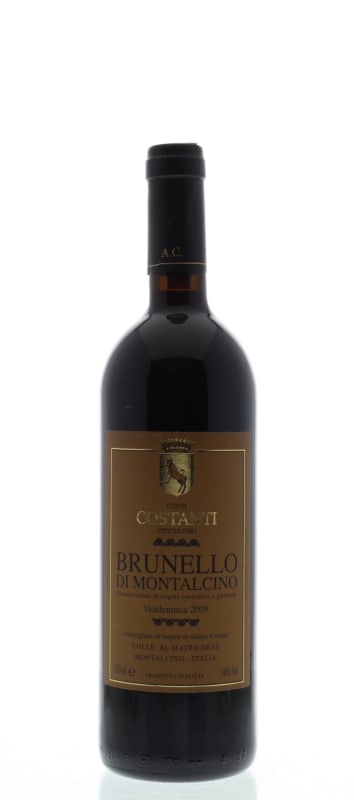


Winemaker Notes
Professional Ratings
-
James Suckling
Soft and fruity with a pretty balance of plum, chocolate and walnuts, following through to a medium to full body with soft tannins and a delicious finish.
-
Robert Parker's Wine Advocate
From the Colle al Matrichese location east of Montalcino’s city walls, the 2009 Brunello di Montalcino shows a rich fabric that is woven tight with evident strands of black fruit, mesquite smoke, crushed black pepper, licorice, rosemary oil and root beer. The wine leans away from the sweet side of Brunello to the savory side and that is ultimately what makes it so attractive. It is put together thanks to masculine and muscular touches with evocative shadings of smoke and mineral that shift and change as the wine opens in the glass. This bouquet is a moving target that keeps your fixed attention for as long as you have the wine in front of you. And, considering the general quality here compared to many of its peers, that won’t be very long at all. The mouthfeel feels a bit shorter than past vintages and that's why this wine didn’t score higher.
Rating: 92+ -
Wine Spectator
A ripe, almost exotic style, offering cherry jam, raspberry coulis and floral aromas and flavors. Supple and balanced, if in a more fruity, up-front way. Fine length. Best from 2016 through 2028.
-
Wine Enthusiast
This wine shows real depth, beginning with earthy aromas of underbrush, ripe berried fruit, blue flower and smidge of leather. The palate offers a core of black cherry accented with notes of baking spices and a hint of truffle alongside a solid tannic backbone and nervous acidity that restrains the berry richness. Drink 2016–2024.


Among Italy's elite red grape varieties, Sangiovese has the perfect intersection of bright red fruit and savory earthiness and is responsible for the best red wines of Tuscany. While it is best known as the chief component of Chianti, it is also the main grape in Vino Nobile di Montepulciano and reaches the height of its power and intensity in the complex, long-lived Brunello di Montalcino. Somm Secret—Sangiovese doubles under the alias, Nielluccio, on the French island of Corsica where it produces distinctly floral and refreshing reds and rosés.

Famous for its bold, layered and long-lived red, Brunello di Montalcino, the town of Montalcino is about 70 miles south of Florence, and has a warmer and drier climate than that of its neighbor, Chianti. The Sangiovese grape is king here, as it is in Chianti, but Montalcino has its own clone called Brunello.
The Brunello vineyards of Montalcino blanket the rolling hills surrounding the village and fan out at various elevations, creating the potential for Brunello wines expressing different styles. From the valleys, where deeper deposits of clay are found, come wines typically bolder, more concentrated and rich in opulent black fruit. The hillside vineyards produce wines more concentrated in red fruits and floral aromas; these sites reach up to over 1,600 feet and have shallow soils of rocks and shale.
Brunello di Montalcino by law must be aged a minimum of four years, including two years in barrel before realease and once released, typically needs more time in bottle for its drinking potential to be fully reached. The good news is that Montalcino makes a “baby brother” version. The wines called Rosso di Montalcino are often made from younger vines, aged for about a year before release, offer extraordinary values and are ready to drink young.