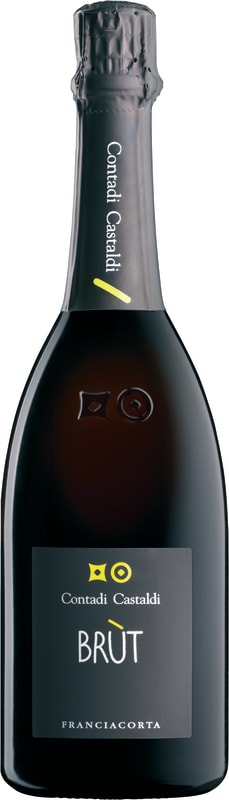


Winemaker Notes
In the glass it is straw yellow in color with greenish highlights, enlivened by a fine and persistent perlage. The nose is fresh, with floral notes of linden, citrus nuances, white peach and green pepper. The mouth is tight and crisp, fresh and vertical, sapid, refined and with a lingering, very enjoyable finish.
Blend: 80% Chardonnay, 10% Pinot Nero, 10% Pinot Bianco
Professional Ratings
-
James Suckling
Restrained almond, lemon leaf and citrus aromas follow through to the palate. The attack is soft, with a silky mousse, zesty acid and a lean body. Polished finish, silky and creamy, not without tension.
-
Robert Parker's Wine Advocate
Tasted from magnum, the Contadi Castaldi NV Franciacorta Brùt (the accent on the "u" is intentional) is a blend of 80% Chardonnay, 10% Pinot Nero and 10% Pinot Bianco that sees partial malolactic fermentation and some barrique aging. fruit selected from across the estate's 160 hectares of vines. It offers a classic Franciacorta bouquet with a bright citrusy element and crushed stone followed by lightly baked aromas of pastry and bread.
-
Vinous
The NV Franciacorta Brut mixes tropical citrus with sesame seeds and nuances of crushed stone. Vibrant and round in feel, it has juicy acidity and crisp mineral tones that elevate its core of ripe orchard fruits. It tapers off with excellent length, leaving the senses completely refreshed.


In the second half of the 20th century, the brickyard went out of business. Vittorio Moretti purchased the property, mostly because of his wife Mariella’s childhood memories associated with this plant, which her godmother had owned and where she used to spend her afternoons after school. When the Franciacorta region was at the peak of its development in the 1980’s, Vittorio and Mariella Moretti decided to convert the brickyard into a winery. Its large spaces and long tunnels where the bricks were fired proved to be the perfect place for ageing Franciacorta vintages and welcoming wine lovers.
A skillful repurposing, which maintained the original designs, turned the ancient brickyard, Fornace Biasca, into today’s winery. The total surface area is 7,000 square meters, with the renovation plan involving a conservative restoration of the central building, with the ground floor used for vinification and ageing, the first floor turned into a finished goods warehouse and the second floor as a party and event location, seating over 300.

A term typically reserved for Champagne and Sparkling Wines, non-vintage or simply “NV” on a label indicates a blend of finished wines from different vintages (years of harvest). To make non-vintage Champagne, typically the current year’s harvest (in other words, the current vintage) forms the base of the blend. Finished wines from previous years, called “vins de reserve” are blended in at approximately 10-50% of the total volume in order to achieve the flavor, complexity, body and acidity for the desired house style. A tiny proportion of Champagnes are made from a single vintage.
There are also some very large production still wines that may not claim one particular vintage. This would be at the discretion of the winemaker’s goals for character of the final wine.

Thanks to the renewal of the collaboration between the Italian Trade Agency (ITA) and Wine.com, 50 new wineries and distilleries have been selected as new suppliers to the Wine.com platform. Click here to learn more about this program.
Italian Wine
Named “Oenotria” by the ancient Greeks for its abundance of grapevines, Italy has always had a culture virtually inextricable from red, white and sparkling wines. Wine grapes grow in every region throughout Italy—a long and narrow boot-shaped peninsula extending into the Mediterranean.
Italian Wine Regions
Naturally, most Italian wine regions enjoy a Mediterranean climate and a notable coastline, if not coastline on all borders, as is the case with the islands of Sicily and Sardinia. The Alps in the northern Italian wine regions of Valle d'Aosta, Lombardy and Alto Adige create favorable conditions for cool-climate grape varieties. The Apennine Mountains, extending from Liguria in the north to Calabria in the south, affect climate, grape variety and harvest periods throughout. Considering the variable terrain and conditions, it is still safe to say that most high quality viticulture in Italy takes place on picturesque hillsides.
Italian Grape Varieties
Italy boasts more indigenous grape varieties than any other country—between 500 and 800, depending on whom you ask—and most Italian wine production relies upon these native grapes. In some Italian wine regions, international varieties have worked their way in, but are declining in popularity, especially as younger growers take interest in reviving local varieties. Most important are Sangiovese, reaching its greatest potential in Tuscany, as well as Nebbiolo, the prized grape of Piedmont, producing single varietal, age-worthy Piedmontese wines. Other important varieties include Corvina, Montepulciano, Barbera, Nero d’Avola and of course the white wines, Trebbiano, Verdicchio and Garganega. The list goes on.