

Winemaker Notes
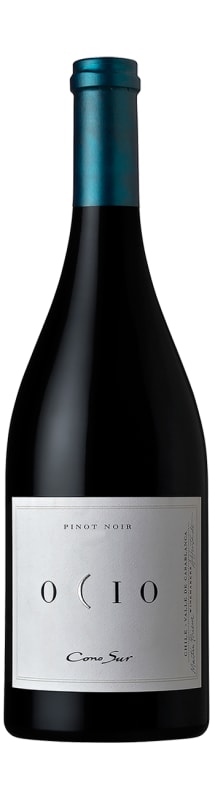
Ocio is the winery's icon Pinot Noir wine. It presents a deep ruby red coloring. Its nose displays delicate aromas of cherries, raspberries with a hint of spices and tobacco. In the mouth it is elegant, with great concentration and acidity. It is a complex, smooth, long and persistent wine.
Professional Ratings
-
Robert Parker's Wine Advocate
The top of the range for Pinot Noir is the 2014 Ocio Pinot Noir, which is sourced from the oldest plants of the variety in the Casablanca Valley that were planted in 1980. Eighty-five percent of the grapes come from the Fundo El Triángulo, 75 kilometers north of Santiago and 20 kilometers from the Pacific Ocean on granite, red clay and sand soils. The remaining 15% of grapes come from Fundo Campo Lindo in San Antonio, from a coastal part some 15 kilometers from the sea. The fermentation is very similar to the rest of the wines from the variety—uncrushed grapes fermented with neutral yeasts in open vats, but here half of the wine matured in new French barriques and the other half in oak foudres for some 14 months followed by another two months in stainless steel at 10 degrees Celsius. In the previous vintage, most of the wine matured in new barriques and 10% was kept in cement eggs, and the wine felt oakier. Now the oak feels subtler and better integrated. I found the wine as extraordinary as the 2013, at a similar quality level, with elegance, depth and complexity, perfect ripeness and integrated oak. It's subtle and fresh, with a mixture of sour cherries, blood oranges and oriental spices. It has a perfectly harmonious palate with a velvety texture, but as the proverbial iron fist in a velvet glove, it's more powerful than you might think. This is a superb Pinot Noir, among the best from Chile.
-
Wine Spectator
Unctuously ripe, rich and full of concentrated dark cherry, plum and spice flavors that are supported by medium-grained tannins. Creamy midpalate, with a long, plush finish that features notes of dark chocolate and dried mint. Drink now through 2022.
-
James Suckling
A dense and fruity red with dark berry, toasted oak and coffee character. Full, chewy and juicy. More fruit-forward, coffee profile.
-
Decanter
There is a lot going on here: smoky, charred notes intermingle with ripe cherries, plums and sweet spices. Strawberry, blackberry and gooseberry flavours with a silky texture and tannins that feel tight, adding grip and persistence. Drinking Window 2016 - 2020


Thin-skinned, finicky and temperamental, Pinot Noir is also one of the most rewarding grapes to grow and remains a labor of love for some of the greatest vignerons in Burgundy. Fairly adaptable but highly reflective of the environment in which it is grown, Pinot Noir prefers a cool climate and requires low yields to achieve high quality. Outside of France, outstanding examples come from in Oregon, California and throughout specific locations in wine-producing world. Somm Secret—André Tchelistcheff, California’s most influential post-Prohibition winemaker decidedly stayed away from the grape, claiming “God made Cabernet. The Devil made Pinot Noir.”

A region that has become synonymous with some of the best whites of Chile, the Casablanca Valley is full of dozens of bodegas who either grow fruit here or come from outside to source from local growers for their own white wine programs. The valley runs from east to west, which means that its westernmost vineyards receive the most cooling influence from the reliable afternoon sea breezes. The soils also tend to be heavier in clay in the west, whereas the eastern end of the valley is warmer and its soils are predominantly granitic. Sauvignon blanc thrives here, Chardonnay does well and Pinot noir is not uncommon.