

Winemaker Notes
Generally known as a sexy wine, Pinot is a natural choice for some of the latest culinary trends. Fusion cuisine, for example, goes very well with this wine’s versatility. It will also enhance the flavor of whole grains and all kinds of mushrooms and herbs, making it a favorite for vegetarians. This is a wine that will make any white meat look good, as well as soups, stews and flavorful fish dishes. Among cheeses, it prefers the dry and tough ones like Edam.
Professional Ratings
-
James Suckling
A red with plum and dried berry character, medium body and fresh and firm tannins. Bright finish. Pretty balance and tension to this.
-
Wilfred Wong of Wine.com
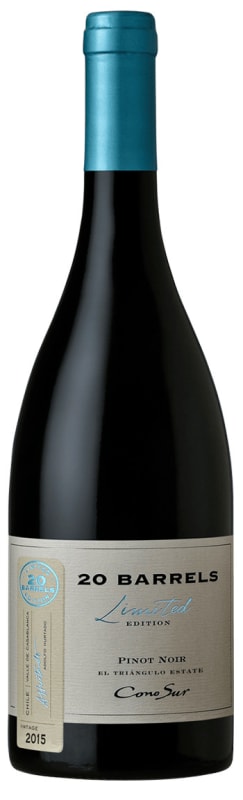
More success from the beautiful Casablanca Valley, the highly energetic 2015 Cono Sur 20 Barrel Pinot Noir exhibits alluring ripe strawberry and tantalizing wild herbs aromas and flavors. The wines palate richness and freshness pair it nicely with Vietnamese five spiced chicken. (Tasted: October 1, 2017, San Francisco, CA)


Thin-skinned, finicky and temperamental, Pinot Noir is also one of the most rewarding grapes to grow and remains a labor of love for some of the greatest vignerons in Burgundy. Fairly adaptable but highly reflective of the environment in which it is grown, Pinot Noir prefers a cool climate and requires low yields to achieve high quality. Outside of France, outstanding examples come from in Oregon, California and throughout specific locations in wine-producing world. Somm Secret—André Tchelistcheff, California’s most influential post-Prohibition winemaker decidedly stayed away from the grape, claiming “God made Cabernet. The Devil made Pinot Noir.”

A region that has become synonymous with some of the best whites of Chile, the Casablanca Valley is full of dozens of bodegas who either grow fruit here or come from outside to source from local growers for their own white wine programs. The valley runs from east to west, which means that its westernmost vineyards receive the most cooling influence from the reliable afternoon sea breezes. The soils also tend to be heavier in clay in the west, whereas the eastern end of the valley is warmer and its soils are predominantly granitic. Sauvignon blanc thrives here, Chardonnay does well and Pinot noir is not uncommon.