

Winemaker Notes
Professional Ratings
-
Robert Parker's Wine Advocate
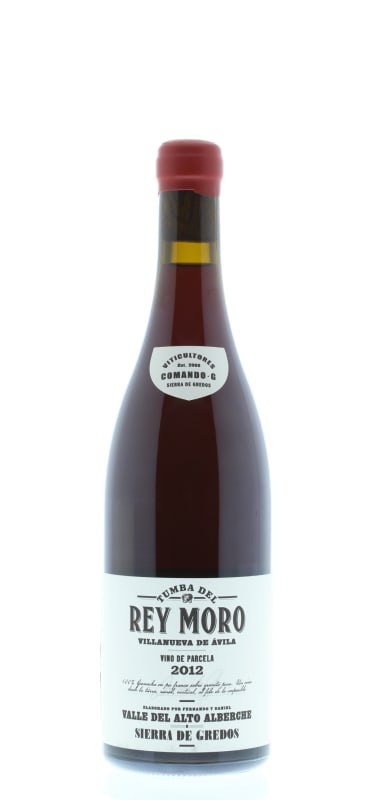
This is a new wine first released in 2012 from a vineyard close to the grave of a Moor king, hence its name. The 2012 Tumba del Rey Moro comes from a north-facing, 1,100-meter-altitude vineyard that is located in village of Villanueva de Ávila. This is a half-hectare of vineyard with ungrafted, head-pruned Garnacha on cool, pure granite soils. It produces very light, ethereal, elegant and cool wines like this 2012. This could be their most extreme and telluric wine; very pale and sharp as a knife, with elusive aromas of earth, minerals, flower petals and a citric, blood-orange note. The palate is even sharper, delineated and laser cut with high acidity, not very concentrated, but really powerful, intense and wild. This is Garnacha in its most extreme expression, and is today the most aromatic and impressive of all the Comando G reds. Is this the big brother of Las Umbrias?


Spanish red wine is known for being bold, heady, rustic and age-worthy, Spain is truly a one-of-a-kind wine-producing nation. A great majority of the country is hot, arid and drought-ridden, and since irrigation has only been recently introduced and (controversially) accepted, viticulture has sustained—and flourished—only through a great understanding of Spain’s particular conditions. Large spacing between vines allows each enough resources to survive and as a result, the country has the most acreage under vine compared to any other country, but is usually third in production.
Of the Spanish red wines, the most planted and respected grape variety is Tempranillo, the star of Spain’s Rioja and Ribera del Duero regions. Priorat specializes in bold red blends, Jumilla has gained global recognition for its single varietal Monastrell and Utiel-Requena has garnered recent attention for its reds made of Bobal.