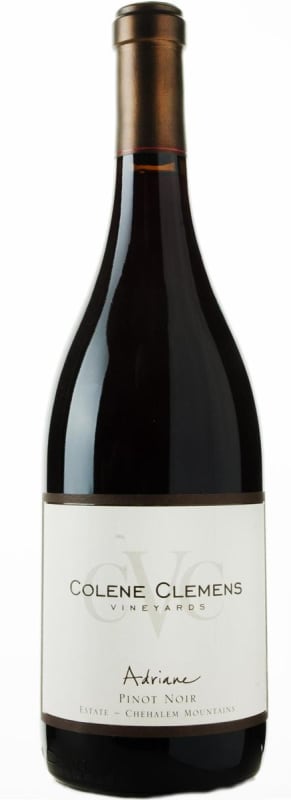


Winemaker Notes
Named after Victoria’s daughter and Colene’s granddaughter, Adriane is an estate cuvée composed of specifically selected barrels that possess deep, concentrated flavors and a persistent finish. The aromas are focused and complex, with a range of red and dark red fruit and sweet spice. On the palate, there is an juicy, rich core of dark fruit, and nuanced hints of spice that end in a well-rounded, supple finish. Age-worthy and well balanced, Adriane is structured to gain complexity and interest over the next eight to twelve years in your cellar.
Professional Ratings
-
Robert Parker's Wine Advocate
The 2015 Pinot Noir Adriane is pale to medium ruby-purple with a nose of cardamom, tilled earth and potpourri over black cherries and berries. Medium-bodied, it has a good concentration of black fruits and spices in the mouth, with a soft frame of grainy tannins and good freshness to lift the earthy finish.
-
Wine Spectator
Sleek and structured, with refined cherry, stony mineral and spiced tea flavors that take on polished tannins toward the finish. Drink now through 2024.


Thin-skinned, finicky and temperamental, Pinot Noir is also one of the most rewarding grapes to grow and remains a labor of love for some of the greatest vignerons in Burgundy. Fairly adaptable but highly reflective of the environment in which it is grown, Pinot Noir prefers a cool climate and requires low yields to achieve high quality. Outside of France, outstanding examples come from in Oregon, California and throughout specific locations in wine-producing world. Somm Secret—André Tchelistcheff, California’s most influential post-Prohibition winemaker decidedly stayed away from the grape, claiming “God made Cabernet. The Devil made Pinot Noir.”

The Chehalem Mountains is a northwest-southeast span of several distinct mountains, ridges and peaks in the northern part of the Willamette Valley. Of all of Willamette Valley's smaller AVAs, it is closest to the city of Portland. Its highest summit, Bald Peak at an elevation of 1,633 feet, serves to generate cooler air for the rest of the AVA and its hillside vineyards. The region covers 70,000 acres but only 1,600 acres are planted to vines; soils of the Chehalem Mountains are a mix of basalt, ocean sediment and loess.