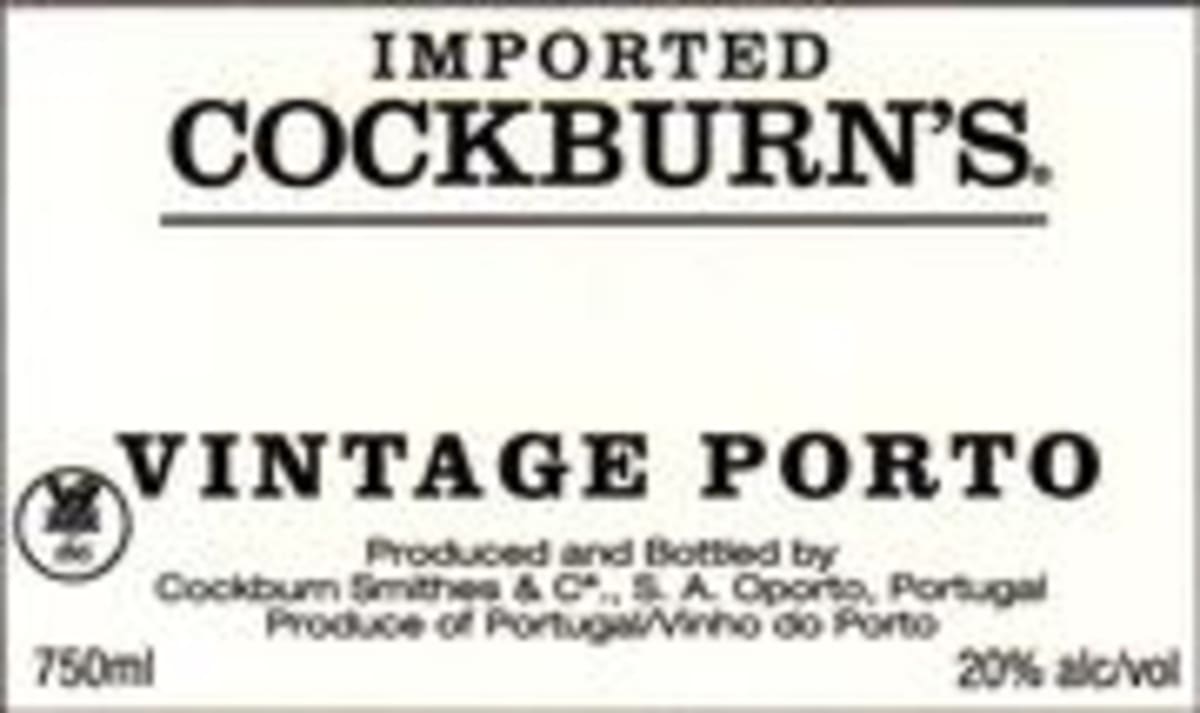

Winemaker Notes
1997 was truly an excellent year in the Douro Valley. The harvest was one of the longest in living memory. At the far eastern extremities of Upper Douro, picking began before the end of August and continued until the second week of October in the cooler areas of the Cima and Baixo Corgo. The crop was small and produced grapes with wonderfully concentrated flavors, providing outstanding wines with excellent structure and an intensely fruity aroma.
Vintage Port is a blend of the finest wine lots from the finest quintas. Grapes from Cockburn's vineyards in the Villariça Valley and from Cockburn's Quinta dos Canais Estate provided the nucleus of the blend. Over recent years, some 875 acres of Cockburn's Estate vineyards have been planted to varietal blocks, a method relatively new to the Douro and pioneered by Cockburn's.
Aged two years in (old) wood and bottled unfiltered, vintage port usually demands at least 10-15 years of bottle age to soften its powerful tannins and permit the robust fruit elements to marry and harmonize. Vintage port is usually considered fully mature after 30 years.


Port is a sweet, fortified wine with numerous styles: Ruby, Tawny, Vintage, Late Bottled Vintage (LBV), White, Colheita, and a few unusual others. It is blended from from the most important red grapes of the Douro Valley, based primarily on Touriga Nacional with over 80 other varieties approved for use. Most Ports are best served slightly chilled at around 55-65°F. To learn more, see our full Port Wine Guide

The home of Port—perhaps the most internationally acclaimed beverage—the Douro region of Portugal is one of the world’s oldest delimited wine regions, established in 1756. The vineyards of the Douro, set on the slopes surrounding the Douro River (known as the Duero in Spain), are incredibly steep, necessitating the use of terracing and thus, manual vineyard management as well as harvesting. The Douro's best sites, rare outcroppings of Cambrian schist, are reserved for vineyards that yield high quality Port.
While more than 100 indigenous varieties are approved for wine production in the Douro, there are five primary grapes that make up most Port and the region's excellent, though less known, red table wines. Touriga Nacional is the finest of these, prized for its deep color, tannins and floral aromatics. Tinta Roriz (Spain's Tempranillo) adds bright acidity and red fruit flavors. Touriga Franca shows great persistence of fruit and Tinta Barroca helps round out the blend with its supple texture. Tinta Cão, a fine but low-yielding variety, is now rarely planted but still highly valued for its ability to produce excellent, complex wines.
White wines, generally crisp, mineral-driven blends of Arinto, Viosinho, Gouveio, Malvasia Fina and an assortment of other rare but local varieties, are produced in small quantities but worth noting.
With hot summers and cool, wet winters, the Duoro has a maritime climate.