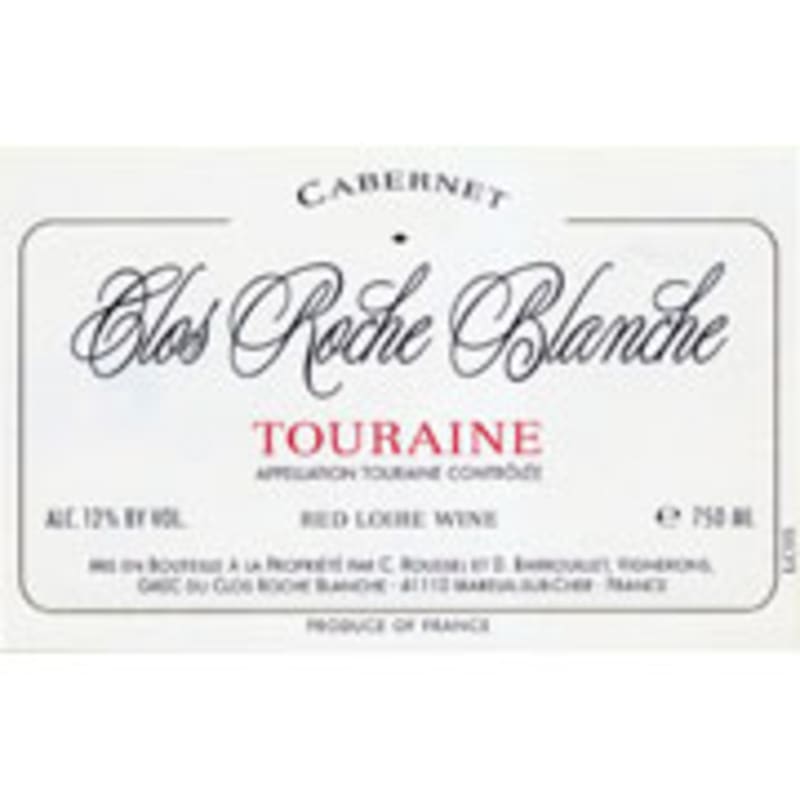

Winemaker Notes
Their soil is poor, mainly clay with flint over a limestone subsoil. The wines produced include a Cabernet (mostly Franc with varied amounts of Sauvignon depending on the vintage), Gamay, Côt (aka Malbec), and Sauvignon Blanc. Roussel and Barrouillet keep yields low by maintaining old vines, using organic fertilizers in moderation and growing grass between and plowing under the rows.
Clos Roche Blanche is a model of non-interventionist winemaking. The winery has been farming organically since the 1970s, and beginning with the 1995 vintage, the winery received the official "organic agricultural" accreditation. They hand-harvest their grapes. The must is handled by gravity at all stages. The wines then age on their lees, and are bottled by gravity by hand without filtration to avoid mechanical manipulation that would unsettle it.


Cabernet Franc, a proud parent of Cabernet Sauvignon, is the subtler and more delicate of the Cabernets. Today Cabernet Franc produces outstanding single varietal wines across the wine-producing world. Somm Secret—One of California's best-kept secrets is the Happy Canyon appellation of Santa Barbara. Here Cabernet Franc shines as a single varietal wine or in blends, expressing sumptuous fruit, savory aromas and polished tannins.

Stretching east along the steep banks of the Loire River, Touraine is a major part of the Middle Loire. Soil variations of clay, sand, tuffeau and gravel throughout its subregions support both white and red varieties. Chinon and Bourgueil remain the source of Loire’s finest Cabernet Franc; various styles of the most outstanding Chenin blanc come from Vouvray and Montlouis.