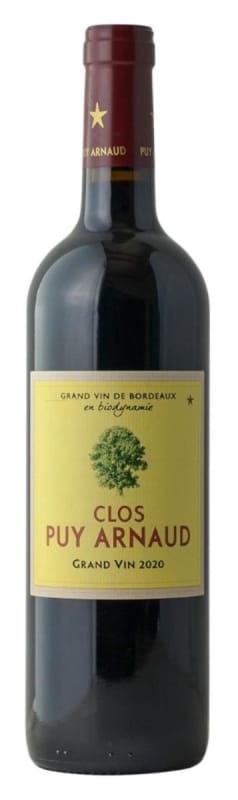


Winemaker Notes
Professional Ratings
-
Vinous
The Clos Puy Arnaud is one of the great wines of this vintage. Rich, deep and exquisitely layered, Clos Puy Arnaud shows how compelling Cotes de Castillon can be. Inky red fruit, blood orange, spice and mocha all race across the palate. Silky tannins wrap around the plush inviting finish. The saline energy and precision here is just unreal. The 2020 was aged in a combination of barrels of different sizes and 1/3rd amphora. This is a wine of tremendous character and personality.
-
Decanter
A burst of ripe berry fruit on the nose, this has the most gorgeous depth of expression. More tannic than in many years, but not bitter or tight. An excellent wine, walking the line of power and sappy juice. Purity of fruit expression is clear. 3.32pH. Certified biodynamic.10% new oak the rest in large sized oak vats and amphora. Unfiltered and unfined.
-
Robert Parker's Wine Advocate
Evoking aromas of dark berries, cassis, violet and spices, the 2020 Clos Puy Arnaud possesses a medium to full-bodied texture on the palate, lively acidity, structuring tannins and a long, saline finish. This vintage confirms the slight stylistic evolution of this estate to more supple tannins.


One of the world’s most classic and popular styles of red wine, Bordeaux-inspired blends have spread from their homeland in France to nearly every corner of the New World. Typically based on either Cabernet Sauvignon or Merlot and supported by Cabernet Franc, Malbec and Petit Verdot, the best of these are densely hued, fragrant, full of fruit and boast a structure that begs for cellar time. Somm Secret—Blends from Bordeaux are generally earthier compared to those from the New World, which tend to be fruit-dominant.

Though the region is larger than many of its Right Bank neighbors, it is one that consistently produces high quality, well-valued red wines. In fact, Cotes de Castillon can almost be considered a geographical eastern extension of St. Emilion, producing similarly-fashioned reds based on Merlot.
Vineyards in the region’s clay, limestone and sandstone soils produce sturdy red wines. On alluvial terraces, in vineyards closer to the Dordogne River, wines tend to be more supple and fruity. In either case, a great Cotes de Castillon red will be bursting with raspberry, plum and blueberry, have an enticing bouquet of dried flowers and a finish that is plush and opulent.