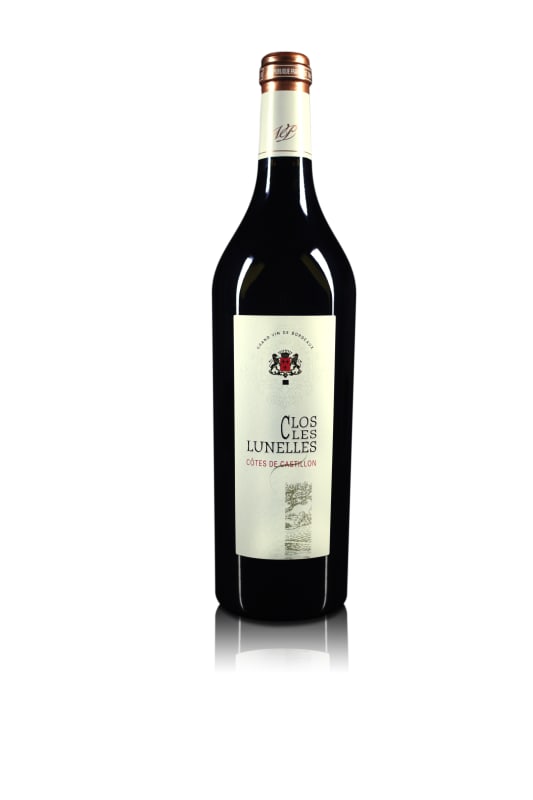


Winemaker Notes
Professional Ratings
-
Robert Parker's Wine Advocate
A small vineyard cropped at 22 hectoliters per hectare has fashioned a blend of 80% Merlot and the rest Cabernet Sauvignon and Cabernet Franc. As usual, the 2007 Clos Les Lunelles is the most concentrated and biggest wine from the Cotes de Castillon. Its dense purple color is accompanied by notes of creamy oak, blackberries, cassis, licorice, incense, and charcoal. Full-bodied, powerful, and rich, it should drink nicely for 10 years.


One of the world’s most classic and popular styles of red wine, Bordeaux-inspired blends have spread from their homeland in France to nearly every corner of the New World. Typically based on either Cabernet Sauvignon or Merlot and supported by Cabernet Franc, Malbec and Petit Verdot, the best of these are densely hued, fragrant, full of fruit and boast a structure that begs for cellar time. Somm Secret—Blends from Bordeaux are generally earthier compared to those from the New World, which tend to be fruit-dominant.

Though the region is larger than many of its Right Bank neighbors, it is one that consistently produces high quality, well-valued red wines. In fact, Cotes de Castillon can almost be considered a geographical eastern extension of St. Emilion, producing similarly-fashioned reds based on Merlot.
Vineyards in the region’s clay, limestone and sandstone soils produce sturdy red wines. On alluvial terraces, in vineyards closer to the Dordogne River, wines tend to be more supple and fruity. In either case, a great Cotes de Castillon red will be bursting with raspberry, plum and blueberry, have an enticing bouquet of dried flowers and a finish that is plush and opulent.