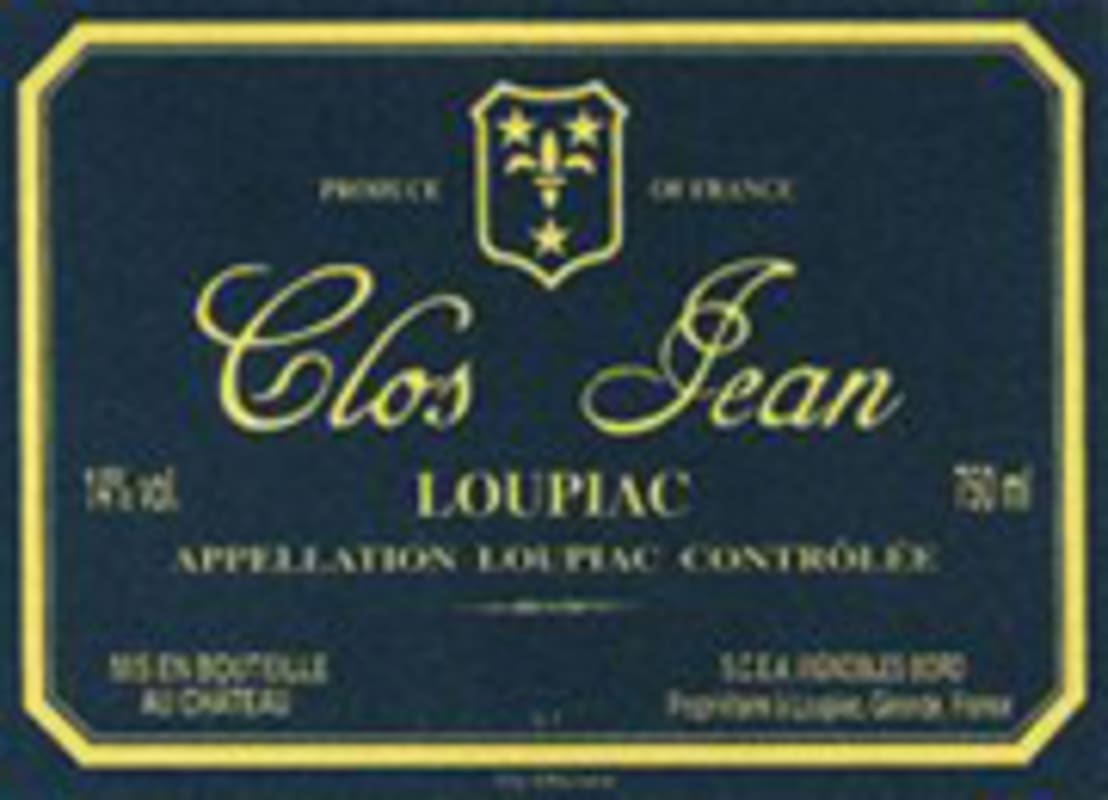

Winemaker Notes
A "must" of the Clos Jean trademark, this wine comes from 80% Semillon grapes, gathered manually in two or three successive picks. Then it's pressed and vinified with care and delicacy to obtain the best that nature, man and technicity can give. The result is remarkable, this wine is regularly quoted in all the specialized magazines, French and foreign, including Robert Parker's documents.


Apart from the classics, we find many regional gems of different styles.
Late harvest wines are probably the easiest to understand. Grapes are picked so late that the sugars build up and residual sugar remains after the fermentation process. Ice wine, a style founded in Germany and there referred to as eiswein, is an extreme late harvest wine, produced from grapes frozen on the vine, and pressed while still frozen, resulting in a higher concentration of sugar. It is becoming a specialty of Canada as well, where it takes on the English name of ice wine.
Vin Santo, literally “holy wine,” is a Tuscan sweet wine made from drying the local white grapes Trebbiano Toscano and Malvasia in the winery and not pressing until somewhere between November and March.
Rutherglen is an historic wine region in northeast Victoria, Australia, famous for its fortified Topaque and Muscat with complex tawny characteristics.

One of the most important wine regions of the world, Bordeaux is a powerhouse producer of wines of all colors, sweetness levels, and price points. Separated from the Atlantic Ocean by a coastal pine forest, this relatively flat region has a mild maritime climate, marked by cool wet winters and warm summers. Annual weather differences create significant vintage variations, making Bordeaux an exciting French wine region to follow.
The Gironde estuary, a defining feature of Bordeaux, separates most of the region into the Left Bank and the Right Bank. Farther inland, where the Gironde splits into the Garonne and Dordogne Rivers, the bucolic, rolling hills of the area in between, called Entre-Deux-Mers, is a source of great quality, approachable reds and whites.
The Left Bank, dominated by Cabernet Sauvignon, contains the Médoc, Graves, and Sauternes, as well as the region’s most famous chateaux. Merlot is important here as the perfect blending grape for Cabernet Sauvignon adding plush fruit and softening Cabernet's sometimes hefty tannins. Cabernet Franc, Petit Verdot and Malbec may also be used in the Left Bank Bordeaux wine blends.
Merlot is the principal Bordeaux wine variety of the Right Bank; Cabernet Franc adds structure and complexity to Merlot, creating wines that are concentrated, supple, and more imminently ready for drinking, compared with their Left Bank counterparts. Key appellations of the Right Bank include St. Emilion and Pomerol.
Dry and sweet Bordeaux white wines are produced throughout the region from Sauvignon Blanc, Sémillon, and sometimes Muscadelle or Sauvignon Gris. Some of the finest dry whites can be found in the Graves sub-appellation of Pessac-Léognan, while Sauternes is undisputedly the gold standard for sweet wines. Small amounts of rosé and sparkling Bordeaux wines are made in the region as well.