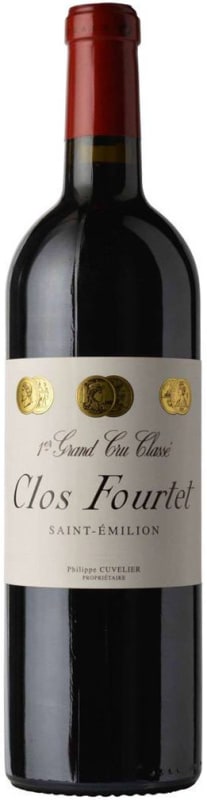


Winemaker Notes
This 2010 vintage combines freshness and power both on the nose and the palate. The aromas mostly consist of black fruits with the notes of licorice and tropical fruit. On the palate, it is appealing and spherical with ripe, close-knit tannins. The finish is straight and very long with lots of freshness following through.
Professional Ratings
-
Jeb Dunnuck
Offering up awesome notes of blackcurrants, darker cherries, truffle earth, smoke, and tobacco, the 2010 Château Clos Fourtet is a powerful, full-bodied Saint-Emilion that has flawless overall balance, building yet polished, integrated tannins, remarkable freshness, and a great finish. This concentrated yet seamless 2010 will continue to drink brilliantly over the coming 40+ years. While I still give the nod to the 2009, this is unquestionably a legendary Saint-Emilion, and I wish every reader could taste it.
-
Robert Parker's Wine Advocate
Deep garnet in color, the 2010 Clos Fourtet is a little closed to begin, opening out to reveal notes of baked black cherries, blueberry preserves and dried mulberries plus hints of cast-iron pan, fertile loam and cigar box with a waft of sandalwood. Full-bodied, the palate has a rock-solid frame of firm, grainy tannins and compelling freshness supporting the muscular fruit, finishing long and mineral laced. Very impressive!
-
Wine Enthusiast
Very dense wine, the dusty tannins floating through the black plum flavors. It's rich, concentrated, complex, with a great depth of flavor. This will always be powerful, while already balanced.
Barrel Sample: 94-96 Points -
Vinous
The 2010 Clos Fourtet was picked between September 30 and October 21 at 34 hl/ha. This has an impressive nose: an enticing mélange of red and black fruit, crushed stone, wilted rose petals and tobacco emanating from the Cabernet Sauvignon. The palate is medium-bodied but with real depth, its power counterbalanced by the keen line of acidity. Touches of spicebox, white pepper and mineral define the precise finish that lingers in the mouth. Outstanding.
-
Wine Spectator
Very winey, with a saturated, sappy feel as kirsch, blackberry preserves and blueberry coulis notes tumble around, while the frame of charcoal, smoldering tobacco and licorice root keeps them penned together. The tannin structure is significant, but very refined, and that should carry this through extended cellaring while the aromatics and midpalate develop harmony. Best from 2016 through 2030.
-
James Suckling
A beautiful wine, with everything in the bottle. Blackberries, minerals and blueberries. Full and silky. Long, long finish.
Barrel Sample: 93-94 Points


One of the world’s most classic and popular styles of red wine, Bordeaux-inspired blends have spread from their homeland in France to nearly every corner of the New World. Typically based on either Cabernet Sauvignon or Merlot and supported by Cabernet Franc, Malbec and Petit Verdot, the best of these are densely hued, fragrant, full of fruit and boast a structure that begs for cellar time. Somm Secret—Blends from Bordeaux are generally earthier compared to those from the New World, which tend to be fruit-dominant.

Marked by its historic fortified village—perhaps the prettiest in all of Bordeaux, the St-Émilion appellation, along with its neighboring village of Pomerol, are leaders in quality on the Right Bank of Bordeaux. These Merlot-dominant red wines (complemented by various amounts of Cabernet Franc and/or Cabernet Sauvignon) remain some of the most admired and collected wines of the world.
St-Émilion has the longest history in wine production in Bordeaux—longer than the Left Bank—dating back to an 8th century monk named Saint Émilion who became a hermit in one of the many limestone caves scattered throughout the area.
Today St-Émilion is made up of hundreds of independent farmers dedicated to the same thing: growing Merlot and Cabernet Franc (and tiny amounts of Cabernet Sauvignon). While always roughly the same blend, the wines of St-Émilion vary considerably depending on the soil upon which they are grown—and the soils do vary considerably throughout the region.
The chateaux with the highest classification (Premier Grand Cru Classés) are on gravel-rich soils or steep, clay-limestone hillsides. There are only four given the highest rank, called Premier Grand Cru Classés A (Chateau Cheval Blanc, Ausone, Angélus, Pavie) and 14 are Premier Grand Cru Classés B. Much of the rest of the vineyards in the appellation are on flatter land where the soils are a mix of gravel, sand and alluvial matter.
Great wines from St-Émilion will be deep in color, and might have characteristics of blackberry liqueur, black raspberry, licorice, chocolate, grilled meat, earth or truffles. They will be bold, layered and lush.