


Winemaker Notes
Professional Ratings
-
Decanter
A lovely red-fruit scented nose, red cherries, balsamic-laced strawberries and peach sweetness. On the palate it's instantly mouthwatering, juicy and succulent. It has a mineral drive through the palate, softly chalky as it reaches a refreshing ending. It tastes pure and clean, very precise, leaving a really enjoyable rounded flavour in the mouth. Delicate but lively, it would work well as an apéritif but would also stand up to some fresh seafood dishes. A blend of Grenache, Cinsault, Syrah and Mourvèdre with between 2-3% of Viognier depending on the vintage. The wine is aged in barrel for structure, depth and complexity.
-
James Suckling
Lots of spices, grilled herbs, smoke and some cinnamon apples develop on the nose. Medium body with a cedary character throughout. Serious with a compact finish. From biodynamically grown grapes with Demeter certification.
-
Robert Parker's Wine Advocate
The ultra-luxe 2019 Languedoc Cabrières Rosé Clos du Temple is extremely limited in production. Certified organic and biodynamic, cultivated by horse and mule, handpicked, aged in new French oak and bottled in eye-catching custom glass, this wine has had everything thrown at it. So, is it worth the price of admission? For most people, the answer will come down to how much money they make and who they're trying to impress. It's certainly an excellent wine. A blend of Grenache, Cinsault, Syrah, Mourvèdre and Viognier, it offers sexy floral notions on the nose alongside subtle aromas of cedar shavings and hints of strawberries. On the palate, it's medium to full-bodied and silky-textured, with plenty of ripeness and richness in evidence, then finishes long and gently citrusy, with modest mocha shadings.
-
Wine Spectator
Reminiscent of a white Burgundy, this pale rosé offers rich flavors of vanilla-laced peach, apricot and currant edged with baking spice notes, all bound by a firm acidity. Aromas of toast, rose petal and wet stone give depth through the long finish. Grenache, Cinsault, Syrah, Viognier and Mourvèdre.

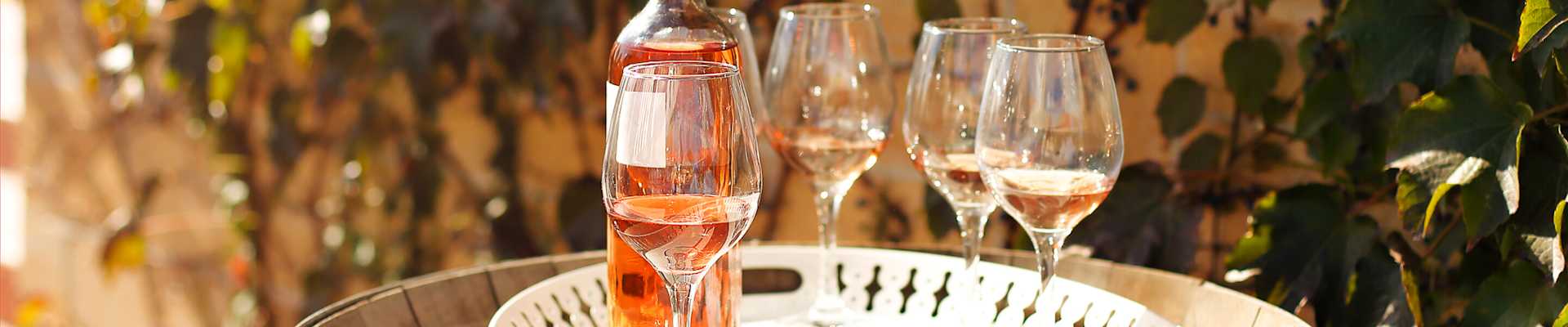
Whether it’s playful and fun or savory and serious, most rosé today is not your grandmother’s White Zinfandel, though that category remains strong. Pink wine has recently become quite trendy, and this time around it’s commonly quite dry. Since the pigment in red wines comes from keeping fermenting juice in contact with the grape skins for an extended period, it follows that a pink wine can be made using just a brief period of skin contact—usually just a couple of days. The resulting color depends on grape variety and winemaking style, ranging from pale salmon to deep magenta.

An extensive appellation producing a diverse selection of good quality and great values, Languedoc spans the Mediterranean coast from the Pyrenees mountains of Roussillon all the way to the Rhône Valley. Languedoc’s terrain is generally flat coastal plains, with a warm Mediterranean climate and frequent risk of drought.
Virtually every style of wine is made in this expansive region. Most dry wines are blends with varietal choice strongly influenced by the neighboring Rhône Valley. For reds and rosés, the primary grapes include Grenache, Syrah, Carignan, Cinsault and Mourvèdre. White varieties include Grenache Blanc, Muscat, Ugni Blanc, Vermentino, Macabéo, Clairette, Piquepoul and Bourbelenc.
International varieties are also planted in large numbers here, in particular Chardonnay, Sauvignon Blanc and Cabernet Sauvignon.
The key region for sparkling wines here is Limoux, where Blanquette de Limoux is believed to have been the first sparkling wine made in France, even before Champagne. Crémant de Limoux is produced in a more modern style.