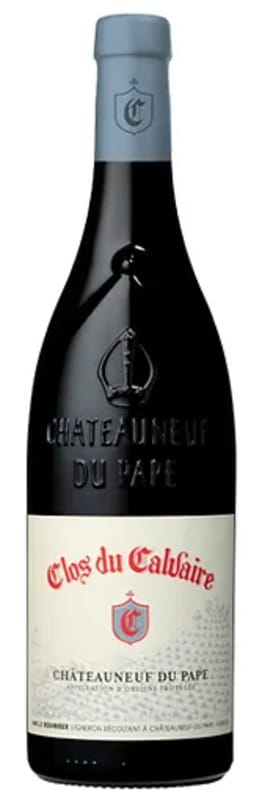


Winemaker Notes
This historic cuvée from Clos du Calvaire offers a nose of red fruits, garrigue, and a hint of pepper. The floral and fruity palate with fine, persistent tannins will surely make you want to taste it again.
Blend: 80% Grenache, 10% Syrah, 10% Cinsault
Professional Ratings
-
James Suckling
A juicy, generous and succulent yet intense blend of grenache, mourvedre, syrah, cinsault and counoise. It’s full-bodied with ripe tannins. It’s well composed, driven and refined, with a juicy core of berries. Typical grenache character with a kick of peppercorns. Structured and linear, with a lively finish and a little warmth. From organically grown grapes. Drink from 2028.
-
Decanter
Hot bay leaf and rosemary – there’s surely some whole bunches here. Seriously unruly, fibrous tannins, but good acidity, energy and freshness. This should take on some complexity in time, but the texture will always be quite grainy I suspect. A bit rustic in texture, but fun.
-
Robert Parker's Wine Advocate
A blend of 65% Grenache Noir, 15% Syrah, 15% Mourvèdre, 3% Cinsault and 2% Counoise, the 2023 Châteauneuf-du-Pape from Clos du Calvaire wafts from the glass with a lively, energetic bouquet of rose, raspberries, violets and wild dark berries. Medium- to full-bodied, enveloping and suave, it offers a fleshy core of fruit framed by velvety tannins, culminating in a long, penetrating and ethereal finish. Rating: 92+
-
Jeb Dunnuck
Juicy black cherries, roasted herbs, and sappy, resinous, peppery floral nuances all emerge from the 2023 Châteauneuf Du Pape, a blend of 65% Grenache, 15% each Syrah and Mourvèdre, 3% Cinsault, and 2% Counoise that was partially destemmed and aged 12 months in foudre and stainless steel. Medium-bodied and beautifully balanced, it has nicely integrated tannins and a great finish.
-
Vinous
Checking in at 15% alcohol, the 2023 Châteauneuf-du-Pape currently undergoes a reductive phase. Time in the glass gradually unlocks ripe red fruits, violets and spicy elements. Much more engaging on the palate than on the nose, the 2023 bundles elevated flavor concentration neatly framed by balancing acidity. Open-knit and red fruit-laden, the 2023 clocks out with freshness on the nuanced finish.


With bold fruit flavors and accents of sweet spice, Grenache, Syrah and Mourvèdre form the base of the classic Rhône Red Blend, while Carignan, Cinsault and Counoise often come in to play. Though they originated from France’s southern Rhône Valley, with some creative interpretation, Rhône blends have also become popular in other countries. Somm Secret—Putting their own local spin on the Rhône Red Blend, those from Priorat often include Merlot and Cabernet Sauvignon. In California, it is not uncommon to see Petite Sirah make an appearance.

Famous for its full-bodied, seductive and spicy reds with flavor and aroma characteristics reminiscent of black cherry, baked raspberry, garrigue, olive tapenade, lavender and baking spice, Châteauneuf-du-Pape is the leading sub-appellation of the southern Rhône River Valley. Large pebbles resembling river rocks, called "galets" in French, dominate most of the terrain. The stones hold heat and reflect it back up to the low-lying gobelet-trained vines. Though the galets are typical, they are not prominent in every vineyard. Chateau Rayas is the most obvious deviation with very sandy soil.
According to law, eighteen grape varieties are allowed in Châteauneuf-du-Pape and most wines are blends of some mix of these. For reds, Grenache is the star player with Mourvedre and Syrah coming typically second. Others used include Cinsault, Counoise and occasionally Muscardin, Vaccarèse, Picquepoul Noir and Terret Noir.
Only about 6-7% of wine from Châteauneuf-du-Pape is white wine. Blends and single-varietal bottlings are typically based on the soft and floral Grenache Blanc but Clairette, Bourboulenc and Roussanne are grown with some significance.
The wine of Chateauneuf-du-Pape takes its name from the relocation of the papal court to Avignon. The lore says that after moving in 1309, Pope Clément V (after whom Chateau Pape-Clément in Pessac-Léognan is named) ordered that vines were planted. But it was actually his successor, John XXII, who established the vineyards. The name however, Chateauneuf-du-Pape, translated as "the pope's new castle," didn’t really stick until the 19th century.