
Winemaker Notes
Try with wild mushroom risotto, honey-balsamic glazed salmon, or fennel-garlic pork roast.
Professional Ratings
-
James Suckling
A pinot noir with clear and bright fruit plus sliced plum and strawberry. Some cream too. Full body, light tannins and a savory finish. Bicarbonate. A no wood year, and loving drinking this.
-
Robert Parker's Wine Advocate
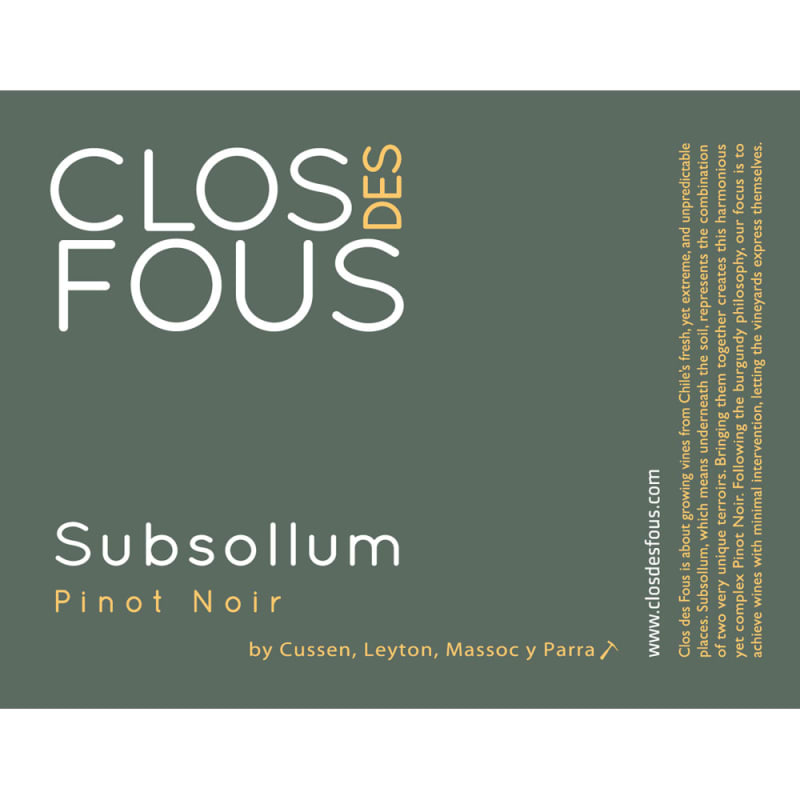
The 2013 Subsollum Pinot Noir is a blend of Pinot Noir from different origins, Aconcagua and Malleco, and is named after the subsoil that is different in each place; there is limestone in Aconcagua and volcanic tuff (volcanic ashes with a high mineral content) in southern Malleco. The grapes are transported to the winery in Cauquenes and each fermented separately. The wine is bottled unoaked and kept in stainless steel vats separately for some 18 months before the components are blended and bottled. The nose is ripe, yet fresh with musky strawberries, hints of decayed leaves and some spices. The palate is light to medium-bodied; here they want a wine that tastes and smell of Pinot Noir, and they certainly achieved it. It's polished, but at the same time it has some wilderness; it has character. Very tasty and easy to drink. 34,000 bottles.


Thin-skinned, finicky and temperamental, Pinot Noir is also one of the most rewarding grapes to grow and remains a labor of love for some of the greatest vignerons in Burgundy. Fairly adaptable but highly reflective of the environment in which it is grown, Pinot Noir prefers a cool climate and requires low yields to achieve high quality. Outside of France, outstanding examples come from in Oregon, California and throughout specific locations in wine-producing world. Somm Secret—André Tchelistcheff, California’s most influential post-Prohibition winemaker decidedly stayed away from the grape, claiming “God made Cabernet. The Devil made Pinot Noir.”

Maule is the Central Valley’s most southern and coolest zone, reaching a southern latitude of 35°S, yet it is still warmer and drier than Bío-Bío to its south. The Maule Valley enjoys success with a unique set of grapes.
It lays claim to the local variety, Pais (synonymous with Tinta Pais, which is actually Tempranillo), which has dominated much of the region’s area under vine until the recent past. Now many growers, not confined by the tradition and regulations of the Old World, also successfully grow Cabernet Sauvignon.
While Maule’s total area under vine remains relatively static, its old Carignan vineyards are undergoing a great revival. The VIGNO (Vignadores del Carignan Vintners) group, an association in charge of promoting this long-forgotten variety, is getting fantastic results from the old vines in its dry-farmed coastal zones.
The Maule includes the subregions of Talca, San Clemente, San Javier, Parral, Linares and Cauquenes.