
Winemaker Notes
Professional Ratings
-
James Suckling
A fascinating handmade wine with so much earth and spice aromas and flavors. Full body, light tannins and a rich and flavorful finish. So much going on here. Made from bought grapes from small growers mostly in the Caquenes region. Old head pruned vines. Pais, cinsult, carignan, malbec, syrah, portugais bleu. Soulful. Drink now.
-
Robert Parker's Wine Advocate
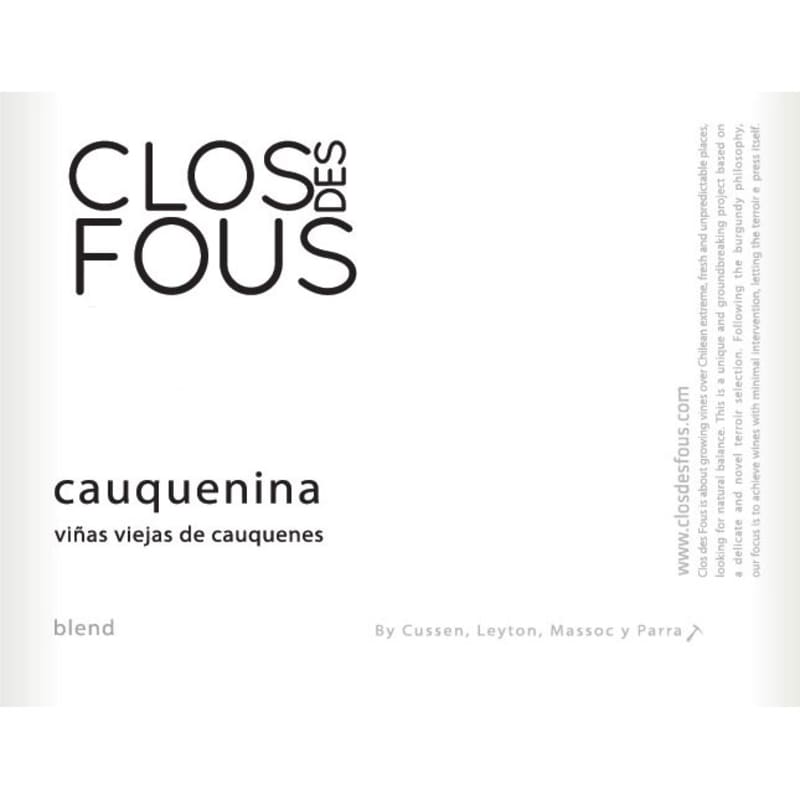
The nose of the balsamic blend 2013 Cauquenina reminded me of the Latuffa -- exotic, perfumed, minty, hinting on eucalyptus, cola nut and dried flowers. It's a multi-grape blend from six old vineyards, some field blends and some with separate varieties; it's made up of almost half of Carignan (Cariñena) with Syrah and Malbec, as well as some 5% to 6% each of Carmenere and Portuguais Bleu, with no oak whatsoever. The palate is superbly integrated and compact, very tasty with lively acidity and a mineral finish. Again, this has a marked style/profile, very showy and aromatic. This has to be one of the best values in Chile, a pleasant red that is so easy to drink, it might be dangerous... 27,596 bottles produced.


With hundreds of red grape varieties to choose from, winemakers have the freedom to create a virtually endless assortment of blended red wines. In many European regions, strict laws are in place determining the set of varieties that may be used, but in the New World, experimentation is permitted and encouraged resulting in a wide variety of red wine styles. Blending can be utilized to enhance balance or create complexity, lending different layers of flavors and aromas. For example, a red wine blend variety that creates a fruity and full-bodied wine would do well combined with one that is naturally high in acidity and tannins. Sometimes small amounts of a particular variety are added to boost color or aromatics. Blending can take place before or after fermentation, with the latter, more popular option giving more control to the winemaker over the final qualities of the wine.
How to Serve Red Wine
A common piece of advice is to serve red wine at “room temperature,” but this suggestion is imprecise. After all, room temperature in January is likely to be quite different than in August, even considering the possible effect of central heating and air conditioning systems. The proper temperature to aim for is 55° F to 60° F for lighter-bodied reds and 60° F to 65° F for fuller-bodied wines.
How Long Does Red Wine Last?
Once opened and re-corked, a bottle stored in a cool, dark environment (like your fridge) will stay fresh and nicely drinkable for a day or two. There are products available that can extend that period by a couple of days. As for unopened bottles, optimal storage means keeping them on their sides in a moderately humid environment at about 57° F. Red wines stored in this manner will stay good – and possibly improve – for anywhere from one year to multiple decades. Assessing how long to hold on to a bottle is a complicated science. If you are planning long-term storage of your reds, seek the advice of a wine professional.

Maule is the Central Valley’s most southern and coolest zone, reaching a southern latitude of 35°S, yet it is still warmer and drier than Bío-Bío to its south. The Maule Valley enjoys success with a unique set of grapes.
It lays claim to the local variety, Pais (synonymous with Tinta Pais, which is actually Tempranillo), which has dominated much of the region’s area under vine until the recent past. Now many growers, not confined by the tradition and regulations of the Old World, also successfully grow Cabernet Sauvignon.
While Maule’s total area under vine remains relatively static, its old Carignan vineyards are undergoing a great revival. The VIGNO (Vignadores del Carignan Vintners) group, an association in charge of promoting this long-forgotten variety, is getting fantastic results from the old vines in its dry-farmed coastal zones.
The Maule includes the subregions of Talca, San Clemente, San Javier, Parral, Linares and Cauquenes.