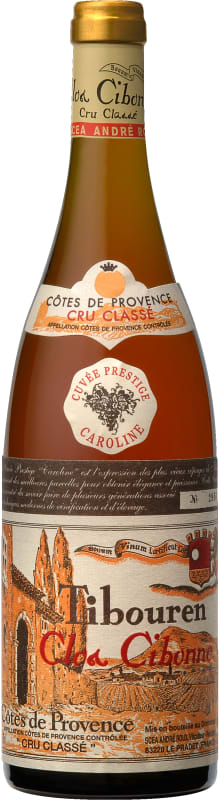


Winemaker Notes
The 2019 Côtes de Provence vintage was low-yielding and high quality, a fine balance between fruit complexity and fresh thirst-quenching acidity. While the hot summer and ongoing dry season gave lower yields, the vines remained healthy and refreshed by their microclimate, providing an ideal marriage of fruit concentration and acidity—an excellent year for long aging.
Professional Ratings
-
Wine & Spirits
There’s nothing like Cibonne rosé anywhere else in Provence. It’s an anomaly, a 37-acre estate devoted to tibouren (known as rossese in Liguria); in the 1930s, then-owner André Roux pulled out all of his mourvèdre vines to make more room for the variety. His descendants still honor his decision by lavishing care on the thin skinned grapes; they attained organic certification for the vines in 2019. They have also retained the family’s foudres, now 120 years old, as well as techniques such as aging thewines under a veil of yeast. And yet, the wines are anything but old-fashioned, as Cuvée Caroline attests: A blend of tibouren with 10 percent grenache and five percent syrah, barrel-fermented with ambient yeasts, it’s a straight shot from the glass to the edge of the Mediterranean. A single whiff captures the warmth of the Provençal summer in its scents of dry scrub and rocky earth; it also smells of the sea, which is less than half a mile from the vineyards.
-
Decanter
Pale shell pink with gold hints. Oak dominant on the nose, opening out on the palate with an initial explosion of ripe strawberries, cherries, juicy peaches, a touch of oranges and discreet floral Tibouren notes. Complex layers develop with toasted nuts, buttered quince, creamy salty caramel oak and firm weighty structure. Long, fresh, saline acidity peeks out from behind the rich fruit. The finish is creamy, saline, gently floral, and just gets better and better. Prime example of Provence creativity and producer individuality.
-
Robert Parker's Wine Advocate
The 2019 Cotes de Provence Rose Cuvee Prestige Caroline was barrel-fermented and aged just under a year in new 300-liter barrels. It's a lovely salmon hue in the glass, redolent of vanilla and cedar and backed by scents of clementines and cloves. Medium to full-bodied, it's a rich, plushly textured rosé that might even benefit from another year of bottle age, although there's no denying the current appeal of a lingering finish that calls creamsicles to mind.


Whether it’s playful and fun or savory and serious, most rosé today is not your grandmother’s White Zinfandel, though that category remains strong. Pink wine has recently become quite trendy, and this time around it’s commonly quite dry. Since the pigment in red wines comes from keeping fermenting juice in contact with the grape skins for an extended period, it follows that a pink wine can be made using just a brief period of skin contact—usually just a couple of days. The resulting color depends on grape variety and winemaking style, ranging from pale salmon to deep magenta.

Cotes de Provence is an extensive but valuable appellation that includes vineyards bordering the main Provencal appellations. Its sites vary from subalpine hills, which receive the cooling effects of the mountains to the north, to the coastal St-Tropez, a region mainly influenced by the warm Mediterranean sunshine.
Here the focus is on quality rosé, as it defines four fifths of the region’s wines. Following in the rosé footsteps, a lot of new effort is going into the region’s red production as well. A new generation has turned its focus on high quality Grenache, Syrah, Cinsault and Carignan. Cotes de Provence white wines, which represent a miniscule part of the region as far as volume, are nonetheless worthy of consideration and can include any combination of Clairette, Semillon, Ugni Blanc and Vermentino.