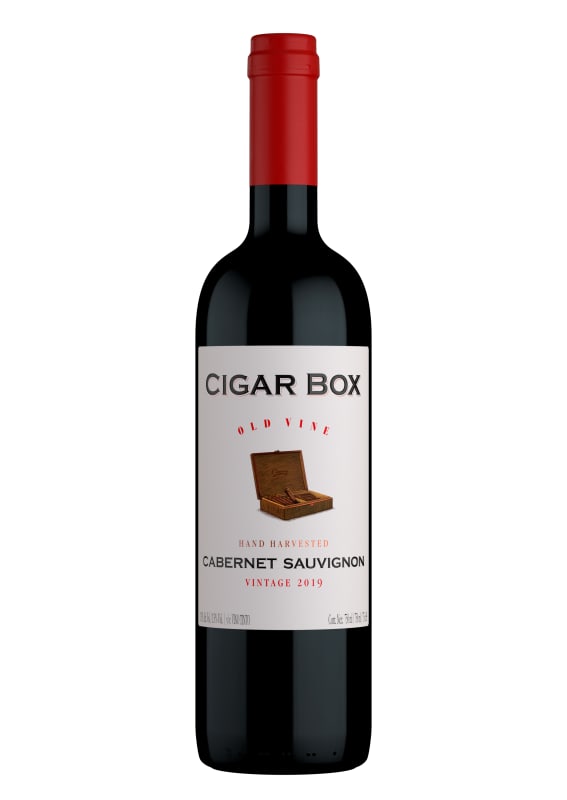


Winemaker Notes
The 2019 Cigar Box Old Vine Cabernet Sauvignon is an intense violet in color. Red and black fruits predominate on the nose with a touch of the variety’s characteristic spices intermingled with notes of vanilla, cloves, and tobacco from the oak. The well-rounded palate offers sweet, elegant tannins that lend depth and lead to a fresh and juicy finish.
Pair this wine with red meats and pork with well-seasoned sauces and cheese soufflés.
Professional Ratings
-
James Suckling
A rich, ripe, dark-fruited cabernet with hints of dark stones, iodine and cedary oak. The palate has a juicy heart of blueberry and cassis flavors with crisp, lively tannin to close. Drink or hold.
-
Wine Enthusiast
Lightly herbal blackberry and plum aromas are typical for quality Chilean Cabernet, while this feels full and fresh, with a seamless blend of pulpy fruit, tannins and acidity. Black cherry and cassis flavors are herbal and lightly chocolaty, while this finishes smooth and steady. Drink through 2023. Santa Rita USA Corporation. Best Buys
-
Wilfred Wong of Wine.com
COMMENTARY: The 2019 Cigar Box Old Vine Hand Harvested Cabernet Sauvignon identifies with wine's brand name as it presents a satisfying experience on the palate. TASTING NOTES: This wine serves up aromas and flavors that include black fruits, a note of rusticity, and smokiness. Pair it grilled baby back ribs in a piquant, slightly spicy sauce. (Tasted: August 20, 2020, San Francisco, CA)


A noble variety bestowed with both power and concentration, Cabernet Sauvignon enjoys success all over the globe, its best examples showing potential to age beautifully for decades. Cabernet Sauvignon flourishes in Bordeaux's Medoc where it is often blended with Merlot and smaller amounts of some combination of Cabernet Franc, Malbecand Petit Verdot. In the Napa Valley, ‘Cab’ is responsible for some of the world’s most prestigious, age-worthy and sought-after “cult” wines. Somm Secret—DNA profiling in 1997 revealed that Cabernet Sauvignon was born from a spontaneous crossing of Cabernet Franc and Sauvignon Blanc in 17th century southwest France.

Dramatic geographic and climatic changes from west to east make Chile an exciting frontier for wines of all styles. Chile’s entire western border is Pacific coastline, its center is composed of warm valleys and on its eastern border, are the soaring Andes Mountains.
Chile’s central valleys, sheltered by the costal ranges, and in some parts climbing the eastern slopes of the Andes, remain relatively warm and dry. The conditions are ideal for producing concentrated, full-bodied, aromatic reds rich in black and red fruits. The eponymous Aconcagua Valley—hot and dry—is home to intense red wines made from Cabernet Sauvignon, Syrah and Merlot.
The Maipo, Rapel, Curicó and Maule Valleys specialize in Cabernet and Bordeaux Blends as well as Carmenère, Chile’s unofficial signature grape.
Chilly breezes from the Antarctic Humboldt Current allow the coastal regions of Casablanca Valley and San Antonio Valley to focus on the cool climate loving varieties, Pinot Noir, Chardonnay and Sauvignon Blanc.
Chile’s Coquimbo region in the far north, containing the Elqui and Limari Valleys, historically focused solely on Pisco production. But here the minimal rainfall, intense sunlight and chilly ocean breezes allow success with Chardonnay and Pinot Noir. The up-and-coming southern regions of Bio Bio and Itata in the south make excellent Riesling, Chardonnay and Pinot Noir.
Spanish settlers, Juan Jufre and Diego Garcia de Cáceres, most likely brought Vitis vinifera (Europe’s wine producing vine species) to the Central Valley of Chile sometime in the 1550s. One fun fact about Chile is that its natural geographical borders have allowed it to avoid phylloxera and as a result, vines are often planted on their own rootstock rather than grafted.