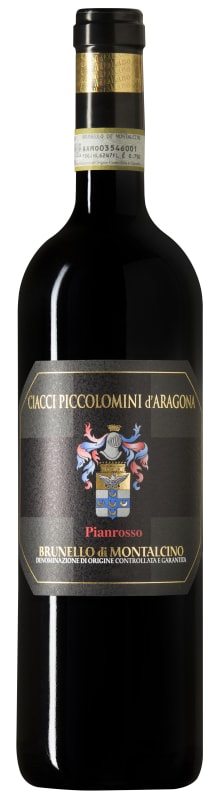


Winemaker Notes
The bouquet is intense, complex, fruit-forward and spicy with hints or ripe red berry fruits enriched by various spicy notes. Warm, soft and harmonic on the palate. Great balance among pronounced tannins, acidity and savoriness. This elegant wine has great potential for further cellar ageing.
Professional Ratings
-
Jeb Dunnuck
A youthful red color, the 2018 Brunello Di Montalcino Pianrosso is spectacular and stands out as one of the top wines I have tasted from the vintage. The nose is pure and detailed, with incense, redcurrants, wild strawberries, fresh lavender, and sweet citrus. Medium to full-bodied, it has a beautifully lifted profile, with ripe tannins, refreshing acidity, and a long, stony-textured finish that stays bright without austerity. It checks all the boxes and is a wine I would happily cellar and follow for years.
-
James Suckling
This is so complex, with lifting citrus and herb undertones to the blue and red berry fruit. Thyme, sage and lavender, with mocha and clove, too. Full-bodied, full of depth and intensity, with firm yet seamless tannins. Evolves to espresso. Balanced, powerful and very long.
-
Robert Parker's Wine Advocate
A special single-vineyard wine with origins in one of the more remote, wild and beautiful corners of Montalcino, this is one of the true treats of the appellation. The Ciacci Piccolomini d'Aragona 2018 Brunello di Montalcino Pianrosso opens to a medium-rich appearance and vibrant color saturation. Sangiovese can lose its color quickly, but it remains beautifully intact here. Sweet cherry, redcurrant, spice, blue flower, balsam herb and orange peel are neatly woven together to create this balanced wine.
-
Wine Enthusiast
Comforting, classic Sangiovese aromas of vanilla, orange peel, cherry and cola on the nose transition onto a palate that levels up the sophistication with austere tannins and fiery acidity balanced by violet, cherry and more orange zest onto a coffee finish.
-
Vinous
Dark depths of crushed plums and black cherries are offset by notes of rosemary, spiced citrus peels and hints of cocoa as the 2018 Brunello di Montalcino Pianrosso opens in the glass. This is an especially racy style for Ciacci Piccolomini d'Aragona, with cooling mineral tones and zesty acidity propelling its ripe berry fruit and hints of sour citrus across the palate. While structured, this finishes with tremendous energy and freshness, leaving the mouth watering with a lingering bitter hint of balsamic spice. The 2018 may not possess the power often associated with the Pianrosso, but it instead impresses with its lively and spicy character.
-
Wine Spectator
A complex red, with dark, savory notes of licorice, eucalyptus and tobacco aligned with cherry and berry flavors. Succulent, showing light viscosity to the texture, with wild herb and iron elements creeping in on the long finish. Power meets grace.
-
Decanter
Both of Ciacci Piccolomini’s 2018s offer a ‘deliciousness’ of taste and a truly umami quality, however the Pianrosso selection delivers greater Brunello satisfaction. Not quite 12 hectares, this iron-rich marly vineyard soaked up just enough warmth to clearly demonstrate its southern origins. It has more shape, form and depth to lend endurance. Iron and salty minerals emerge from a backdrop of persimmon and hibiscus, finishing with Mediterranean herbs. Docile and yielding, the gentle sandy tannins give textural complexity as well as an immediate drinkability.


Among Italy's elite red grape varieties, Sangiovese has the perfect intersection of bright red fruit and savory earthiness and is responsible for the best red wines of Tuscany. While it is best known as the chief component of Chianti, it is also the main grape in Vino Nobile di Montepulciano and reaches the height of its power and intensity in the complex, long-lived Brunello di Montalcino. Somm Secret—Sangiovese doubles under the alias, Nielluccio, on the French island of Corsica where it produces distinctly floral and refreshing reds and rosés.

Famous for its bold, layered and long-lived red, Brunello di Montalcino, the town of Montalcino is about 70 miles south of Florence, and has a warmer and drier climate than that of its neighbor, Chianti. The Sangiovese grape is king here, as it is in Chianti, but Montalcino has its own clone called Brunello.
The Brunello vineyards of Montalcino blanket the rolling hills surrounding the village and fan out at various elevations, creating the potential for Brunello wines expressing different styles. From the valleys, where deeper deposits of clay are found, come wines typically bolder, more concentrated and rich in opulent black fruit. The hillside vineyards produce wines more concentrated in red fruits and floral aromas; these sites reach up to over 1,600 feet and have shallow soils of rocks and shale.
Brunello di Montalcino by law must be aged a minimum of four years, including two years in barrel before realease and once released, typically needs more time in bottle for its drinking potential to be fully reached. The good news is that Montalcino makes a “baby brother” version. The wines called Rosso di Montalcino are often made from younger vines, aged for about a year before release, offer extraordinary values and are ready to drink young.