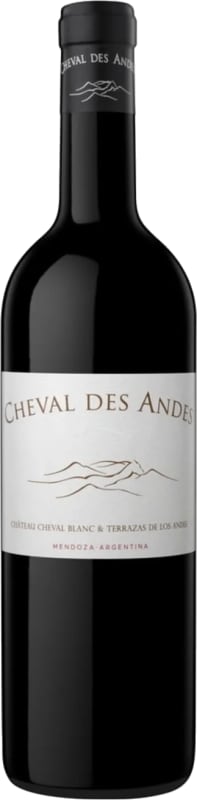


Winemaker Notes
#50 Wine Spectator Top 100 of 2025
The wine of Cheval des Andes combines the vibrant and intense expression of Argentinian Malbec with the rigour, elegance and savoir-faire of a great Bordeaux.
Professional Ratings
-
Vinous
The 2022 Cheval des Andes is a significant upgrade to Mendoza’s historic regional blends, combining grapes from Las Compuertas (Luján de Cuyo) and Paraje Altamira (Uco Valley). The 2022 vintage allowed for a slower ripening of Cabernet Sauvignon, which take prominence in this blend alongside 30% Malbec and 5% Petit Verdot. Aging was carried out in 40% 225-liter Bordeaux barrels, 35% 400-liter barrels and 25% 2,500-liter foudres, with 50% new oak. A bouquet of bright fruit—raspberry, blueberry and delicate cassis—and complementary bay leaf and mint tones give way to a touch of ash and mild bell pepper. Boasting serious concentration, fine tannins and a slight creaminess, the 2022 has a structure that is firm but never tight, maintaining weight without losing balance. The finish is long, energetic and full of flavor. This is an exceptionally beautiful wine.
-
James Suckling
Aromas of dark currants, spices, cloves and a touch of elderberries. The palate is elegant and medium- to full-bodied with polished, precise tannins, firm fruit, a juicy backbone and a solid and flavorful finish. 65% cabernet sauvignon and 35% malbec from Lujan and Altamira. Drink from 2027.
-
Robert Parker's Wine Advocate
Soon to be released through La Place de Bordeaux, the 2022 Cheval des Andes opens with an exotic, spice-driven bouquet, supplemented by lifted herbal notes and a vibrantly red-fruited and perfumed backdrop. The palate is similarly energetic, melding an elegantly rich, polished texture with a slender, tensile energy. It concludes with a long, persistent and high-toned finish that gradually unfurls a sturdy structure of supremely refined tannins. This is an excellent counterpoint to the comparatively darker and more open-knit 2021, showcasing a brighter, more tenacious profile while sacrificing none of the grace, nuance and textural attention to detail that has come to define Cheval des Andes. It's a blend of 65% Cabernet Sauvignon, 30% Malbec and 5% Petit Verdot.
-
Wine Enthusiast
In a shift from earlier vintages, where Malbec was more prominent, this year’s blend includes over half Cabernet Sauvignon. The result is a fuller-bodied wine that opens with aromas of rose petals, ripe red fruit, black pepper, and graphite. It’s silky,with depth, tension, and integrated cedar notes complementing a palate of lively fruit and subtle meaty undertones. Hints of spices and licorice enhance the flavors. Cellar Selection.
-
Jeb Dunnuck
A partnership between Château Cheval Blanc and Terrazas De Los Andes, the 2022 Cheval Des Andes blends 65% Cabernet Sauvignon, 30% Malbec, and 5% Petit Verdot. Iron and gunpowder aromatics dominate, with a supple tension to the tannins and well-integrated oak. This will drink well over the next 12-15 years.
-
Wine Spectator
Supremely structured and rather muscular in style, this offers a loam and iron base, juxtaposed against subtle floral and dried thyme notes that mix with a dense, compact core of cherry and Santa Rosa plum. For all this muscle, there’s finesse on the finish, with mace and floral red currant details lingering around well-formed tannins. Built to cellar. Cabernet Sauvignon, Malbec, Petit Verdot.


One of the world’s most classic and popular styles of red wine, Bordeaux-inspired blends have spread from their homeland in France to nearly every corner of the New World. Typically based on either Cabernet Sauvignon or Merlot and supported by Cabernet Franc, Malbec and Petit Verdot, the best of these are densely hued, fragrant, full of fruit and boast a structure that begs for cellar time. Somm Secret—Blends from Bordeaux are generally earthier compared to those from the New World, which tend to be fruit-dominant.

By far the largest and best-known winemaking province in Argentina, Mendoza is responsible for over 70% of the country’s enological output. Set in the eastern foothills of the Andes Mountains, the climate is dry and continental, presenting relatively few challenges for viticulturists during the growing season. Mendoza, divided into several distinctive sub-regions, including Luján de Cuyo and the Uco Valley, is the source of some of the country’s finest wines.
For many wine lovers, Mendoza is practically synonymous with Malbec. Originally a Bordelaise variety brought to Argentina by the French in the mid-1800s, here it found success and renown that it never knew in its homeland where a finicky climate gives mixed results. Cabernet Sauvignon, Syrah, Merlot and Pinot Noir are all widely planted here as well (and sometimes even blended with each other or Malbec). Mendoza's main white varieties include Chardonnay, Torrontés, Sauvignon Blanc and Sémillon.