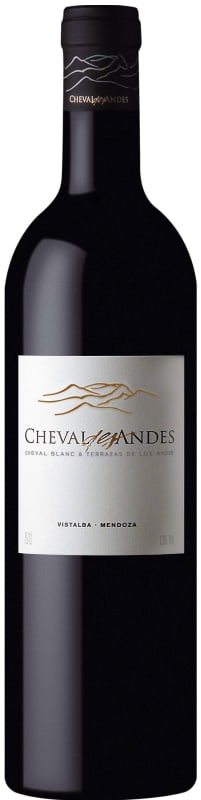


Winemaker Notes
Intense red color with purple shades. The nose is subtle, whispered and precise, but at the same time wide and enveloping. It reveals delicate fresh aromas such as violet and pepper in harmony with warmer notes of raspberry and black fruits. On the palate, it represents an elegant expression of Cheval des Andes in a warm vintage. Its full-body, manifested from the mouth entry, is accompanied by very fine tannins that converge in a tense finish with marked acidity and freshness.
Professional Ratings
-
James Suckling
Very perfumed aromas of crushed berries such as raspberries and lemon rind. Plenty of flowers and sandalwood, too. Full body, very fine tannins and focus with a lovely, ethereal sensibility, which gives it balance and freshness. I love the energy and precision. It's all about subtlety. Despite the slightly difficult weather, this is a masterpiece in harmony. Drink in 2020 and onwards.
-
Robert Parker's Wine Advocate
I retasted the 2015 Cheval des Andes, a blend of 69% Malbec and 31% Cabernet Sauvignon, not that different from the current 2017. In fact, the alcohol levels and acidity are also pretty similar, and the wines have some parallels. This is clearly the ripest and more tannic of the three vintages tasted together—2015, 2016 and 2017—a comparative tasting that shows the evolution of their work beyond the style of the vintage. Having said that, the wines show the character of the year more and more; they are more transparent and reflect the style of the vintage in a more precise way.
-
Wine Spectator
Dense and brawny, featuring ripe dark fruit and Asian spice flavors, accented by cocoa powder notes. Shows creamy richness midpalate, with a finish that lingers with coffee bean details. Malbec, Cabernet Sauvignon and Petit Verdot. Drink now through 2024


One of the world’s most classic and popular styles of red wine, Bordeaux-inspired blends have spread from their homeland in France to nearly every corner of the New World. Typically based on either Cabernet Sauvignon or Merlot and supported by Cabernet Franc, Malbec and Petit Verdot, the best of these are densely hued, fragrant, full of fruit and boast a structure that begs for cellar time. Somm Secret—Blends from Bordeaux are generally earthier compared to those from the New World, which tend to be fruit-dominant.

By far the largest and best-known winemaking province in Argentina, Mendoza is responsible for over 70% of the country’s enological output. Set in the eastern foothills of the Andes Mountains, the climate is dry and continental, presenting relatively few challenges for viticulturists during the growing season. Mendoza, divided into several distinctive sub-regions, including Luján de Cuyo and the Uco Valley, is the source of some of the country’s finest wines.
For many wine lovers, Mendoza is practically synonymous with Malbec. Originally a Bordelaise variety brought to Argentina by the French in the mid-1800s, here it found success and renown that it never knew in its homeland where a finicky climate gives mixed results. Cabernet Sauvignon, Syrah, Merlot and Pinot Noir are all widely planted here as well (and sometimes even blended with each other or Malbec). Mendoza's main white varieties include Chardonnay, Torrontés, Sauvignon Blanc and Sémillon.