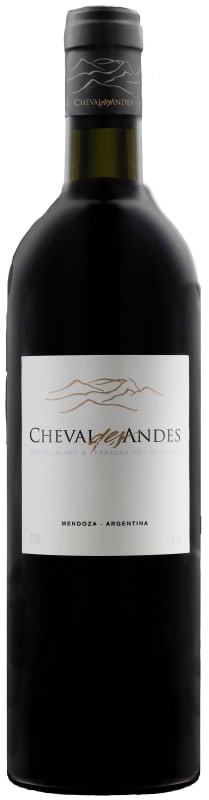


Winemaker Notes
Professional Ratings
-
Robert Parker's Wine Advocate
The 2014 Cheval des Andes is a different blend than previous years and contains a high percentage of Malbec and more Petit Verdot than Cabernet Sauvignon. This reflects the strict selection they had to do in a rainy year that was very challenging for Cabernet Sauvignon, especially in certain parts of the traditional vine-growing regions of Mendoza. The final breakdown of the blend is 83% Malbec, 9% Petit Verdot and 8% Cabernet Sauvignon. It is from the first of a series of three wet vintages where they see lower temperatures as an advantage to get where they want to go. They are more after elegance, freshness and complexity rather than power. In this vintage, they only used 15% new oak for the élevage in order to preserve the fresh aromatic expression of Malbec, and the aging lasted 15 months. It's incredibly fresh and floral, superbly balanced and very charming. This is the year with the most Malbec ever; it was an accident, but it was the kind of Malbec they like. They generally aim to have more Cabernet in the blend, but that wasn't possible in this low-yielding vintage. The palate is very balanced and elegant, with very good freshness and some restraint, not alcoholic or sweet at all. They find a lot of similarities with 2014 in Bordeaux—classical, fresh, quite transparent and juicy but precise. This has to be the best Cheval des Andes I've tried so far. They tell me this is the first vintage that really follows the style they want to produce in Argentina, with balance, complexity and freshness, away from high alcohol, extraction, oak and excess.
-
James Suckling
A rich and round-textured red with gentle tannins and a flavorful finish. Full-bodied, round and succulent. This is 84% malbec and the rest is cabernet sauvignon and petit verdot.
-
Wine Spectator
Powerful, inky and ripe-tasting, with muscular dark fruit flavors that feature plenty of smoky notes. Dark chocolate and cream details show on the long, plush finish. Malbec, Cabernet Sauvignon and Petit Verdot. Drink now through 2022.


One of the world’s most classic and popular styles of red wine, Bordeaux-inspired blends have spread from their homeland in France to nearly every corner of the New World. Typically based on either Cabernet Sauvignon or Merlot and supported by Cabernet Franc, Malbec and Petit Verdot, the best of these are densely hued, fragrant, full of fruit and boast a structure that begs for cellar time. Somm Secret—Blends from Bordeaux are generally earthier compared to those from the New World, which tend to be fruit-dominant.

By far the largest and best-known winemaking province in Argentina, Mendoza is responsible for over 70% of the country’s enological output. Set in the eastern foothills of the Andes Mountains, the climate is dry and continental, presenting relatively few challenges for viticulturists during the growing season. Mendoza, divided into several distinctive sub-regions, including Luján de Cuyo and the Uco Valley, is the source of some of the country’s finest wines.
For many wine lovers, Mendoza is practically synonymous with Malbec. Originally a Bordelaise variety brought to Argentina by the French in the mid-1800s, here it found success and renown that it never knew in its homeland where a finicky climate gives mixed results. Cabernet Sauvignon, Syrah, Merlot and Pinot Noir are all widely planted here as well (and sometimes even blended with each other or Malbec). Mendoza's main white varieties include Chardonnay, Torrontés, Sauvignon Blanc and Sémillon.