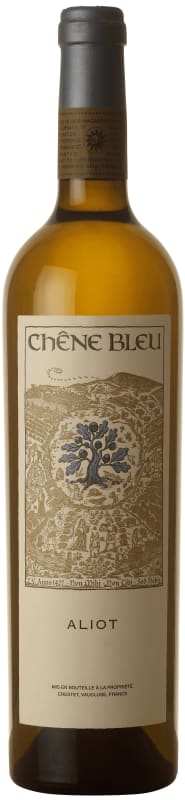


Winemaker Notes
An attractive golden yellow, bright and clear with lime tints. Rich and complex aromas with notes of toasted vanilla, rich ripe white fruits and a touch of hazelnut and brioche. Lovely rich and fresh primary flavors linger, supported by a natural acidity which extends the finish. The palate mirrors the nose with buttery notes, white fruits and a saline minerality.
A Burgundy-style white to pair with salmon or poultry in cream sauce, pâté and hard-to-pair dishes like artichoke, asparagus, salty cheeses.
Blend: 55% Roussanne, 38% Grenache Blanc, 5% Clairette, 2% Rolle
Professional Ratings
-
Jeb Dunnuck
Checking in as 55% Roussanne, 38% Grenache Blanc, and the rest Clairette and Rolle, the 2017 Vaucluse Aliot Blanc sports a still vibrant gold hue as well as an awesome nose of buttered pineapple, white flowers, brioche, and marzipan. This carries to a medium-bodied white with beautiful overall balance, a rich, layered mouthfeel, nicely integrated acidity, and a gorgeous finish. This stunningly good white will stand up to the best from the Rhône. I'd say it's fully mature now, but guessing the drinking window on Rhone whites is fraught with peril.
-
Wine Spectator
Distinctive and compelling, with green fig, ripe honeydew, peach and floral details underscored by umami, earth and a hint of brioche. Fleshy and plump on the palate, with a thread of smoke and wet flint adding savory details, along with green herbs and a salty vein of mineral. Roussanne, Grenache Blanc, Marsanne and Viognier.


Full-bodied and flavorful, white Rhône blends originate from France’s Rhône Valley. Today these blends are also becoming popular in other regions. Typically some combination of Grenache Blanc, Marsanne, Roussanne and Viognier form the basis of a white Rhône blend with varying degrees of flexibility depending on the exact appellation. Somm Secret—In the Northern Rhône, blends of Marsanne and Roussanne are common but the south retains more variety. Marsanne, Roussanne as well as Bourboulenc, Clairette, Picpoul and Ugni Blanc are typical.

A long and narrow valley producing flavorful red, white, and rosé wines, the Rhône is bisected by the river of the same name and split into two distinct sub-regions—north and south. While a handful of grape varieties span the entire length of the Rhône valley, there are significant differences between the two zones in climate and geography as well as the style and quantity of Rhône wines produced. The Northern Rhône, with its continental climate and steep hillside vineyards, is responsible for a mere 5% or less of the greater region’s total output. The Southern Rhône has a much more Mediterranean climate, the aggressive, chilly Mistral wind and plentiful fragrant wild herbs known collectively as ‘garrigue.’
In the Northern Rhône, the only permitted red variety is Syrah, which in the appellations of St.-Joseph, Crozes-Hermitage, Hermitage, Cornas and Côte-Rôtie, it produces velvety black-fruit driven, savory, peppery red wines often with telltale notes of olive, game and smoke. Full-bodied, perfumed whites are made from Viognier in Condrieu and Château-Grillet, while elsewhere only Marsanne and Roussanne are used, with the former providing body and texture and the latter lending nervy acidity. The wines of the Southern Rhône are typically blends, with the reds often based on Grenache and balanced by Syrah, Mourvèdre, and an assortment of other varieties. All three northern white varieties are used here, as well as Grenache Blanc, Clairette, Bourbelenc and more. The best known sub-regions of the Southern Rhône are the reliable, wallet-friendly Côtes du Rhône and the esteemed Châteauneuf-du-Pape. Others include Gigondas, Vacqueyras and the rosé-only appellation Tavel.