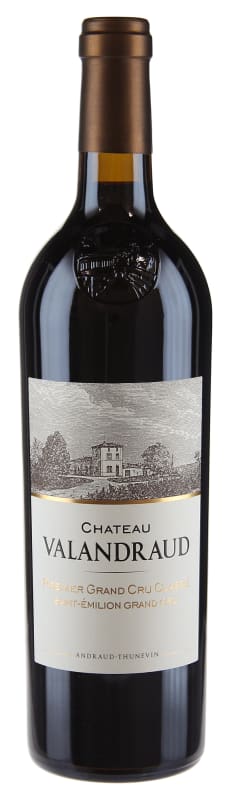


Winemaker Notes
Blend: 84% Merlot, 8% Cabernet Franc and 8% Cabernet Sauvignon
Professional Ratings
-
Jeb Dunnuck
Loads of sweet cassis, violets, graphite, and tons of floral nuances define the aromatics of the 2023 Château Valandraud, another great showing in this vintage. I love its overall balance, purity, and finesse while it still brings that classic Valandraud sexiness. It's full-bodied on the palate, with a pure, layered mouthfeel, incredibly polished tannins, and perfect balance.
-
James Suckling
As always, Valandraud is defined by its concentration, opulence and depth, and 2023 is no exception. Expect masses of ripe but fresh blackberries, licorice, dark chocolate, hazelnuts and some pepper. Structured and full-bodied, with tight, fine-grained tannins and a juicy, intense finish. Glossy and layered, with voluptuous fruit. Modern and extremely long, lasting more than a minute.
-
Vinous
The 2023 Valandraud delivers exactly what you expect on the nose from Jean-Luc Thunevin's crown jewel: very polished scents of black cherries, cassis and crushed violets. One sample had a soupçon of sur-maturité, although another at the château displayed more composure and coolness. The palate is rich and fruit-driven with layers of black fruit. The sample at the château showed more backbone and grip, a healthy sprinkling of cracked black pepper and a long and persistent finish. Give this three to five years, because it is a seriously good Saint-Émilion. -Neal Martin
Barrel Sample: 95-97 -
Wilfred Wong of Wine.com
One must never skip Château Valandraud when it is poured at a tasting, and boy I did not miss it. The 2023 vintage of this "garage winery" is outstanding from start to finish. This beautiful wine slides down the palate like silk be landing in a comfortable place. Some might say that this wine is too modern, but that would minimized this wine's excellence. Its juicy blackberries with hints of chocolate would make it perfecto with a prime rib dinner. Oh, and don't forget the fresh horseradish. (Tasted: January 22, 2026, San Francisco, CA)
-
Decanter
The best barrel sample that I have tasted from this estate in a long time, as it reflects not only the dark ripe fruit one expects, but also an extra dimension of freshness, with blood red orange lift on the finish. Let's not get ahead of ourselves: the attack (with similar aromas) reflects beguiling blackberry liqueur and cassis creaminess, along with red liquorice and iodine freshness. I still get oak stave aspects from the 100% new oak (which begs some caution, given the 15% alcohol), but superb mid-palate depth combined with that fine finish augurs well for the future. Strong potential for a higher score after bottling.
Barrel Sample: 94 -
Wine Spectator
This is deliciously succulent, with boysenberry and blackberry compote notes showing good energy as sandalwood, mesquite, black tea and anise swirl through. Seductive finish. Merlot, Cabernet Franc and Cabernet Sauvignon.


One of the world’s most classic and popular styles of red wine, Bordeaux-inspired blends have spread from their homeland in France to nearly every corner of the New World. Typically based on either Cabernet Sauvignon or Merlot and supported by Cabernet Franc, Malbec and Petit Verdot, the best of these are densely hued, fragrant, full of fruit and boast a structure that begs for cellar time. Somm Secret—Blends from Bordeaux are generally earthier compared to those from the New World, which tend to be fruit-dominant.

Marked by its historic fortified village—perhaps the prettiest in all of Bordeaux, the St-Émilion appellation, along with its neighboring village of Pomerol, are leaders in quality on the Right Bank of Bordeaux. These Merlot-dominant red wines (complemented by various amounts of Cabernet Franc and/or Cabernet Sauvignon) remain some of the most admired and collected wines of the world.
St-Émilion has the longest history in wine production in Bordeaux—longer than the Left Bank—dating back to an 8th century monk named Saint Émilion who became a hermit in one of the many limestone caves scattered throughout the area.
Today St-Émilion is made up of hundreds of independent farmers dedicated to the same thing: growing Merlot and Cabernet Franc (and tiny amounts of Cabernet Sauvignon). While always roughly the same blend, the wines of St-Émilion vary considerably depending on the soil upon which they are grown—and the soils do vary considerably throughout the region.
The chateaux with the highest classification (Premier Grand Cru Classés) are on gravel-rich soils or steep, clay-limestone hillsides. There are only four given the highest rank, called Premier Grand Cru Classés A (Chateau Cheval Blanc, Ausone, Angélus, Pavie) and 14 are Premier Grand Cru Classés B. Much of the rest of the vineyards in the appellation are on flatter land where the soils are a mix of gravel, sand and alluvial matter.
Great wines from St-Émilion will be deep in color, and might have characteristics of blackberry liqueur, black raspberry, licorice, chocolate, grilled meat, earth or truffles. They will be bold, layered and lush.