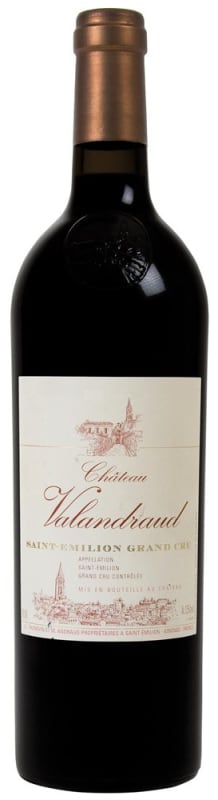


Winemaker Notes
Blend: 70% Merlot, 25% Cabernet Franc, 5% Cabernet Sauvignon
Professional Ratings
-
Jeb Dunnuck
A blockbuster in every sense of the word, the 2018 Château Valandraud reveals ripe black fruits, smoke, leafy tobacco, crushed stone, and graphite on the nose. It's incredibly rich, powerful, and concentrated on the palate, with a layered, pure profile, ultra-fine tannins, and a thrilling finish. This is a total blockbuster of a Valandraud that brings so much character, depth, and richness while staying weightless and insanely pure.
-
James Suckling
This is really rich and intense with beautiful blackberry, violet and blueberry aromas that follow through to a full-bodied palate with extremely polished tannins that caress your palate. Love the texture and purity to the wine. Fantastic. Try after 2025.
-
Wine Enthusiast
This release continues the great run of vintages from this estate, based in the eastern part of Saint-Emilion. Powerful tannins are echoed by sumptuous black-plum and berry flavors. The high alcohol shows in the density although this concentrated wine does stay comfortably in balance. It needs plenty of aging. Don’t drink before 2027. Cellar Selection
-
Robert Parker's Wine Advocate
Deep purple-black in color, the 2018 Valandraud is still sporting a fair bit of oak on the nose, with the cedary notions giving way to a profound core of Black Forest cake, stewed plums and boysenberry preserves, plus suggestions of espresso, clove oil, unsmoked cigars and charcuterie with a waft of Chinese five spice. The full-bodied palate is jam-packed with rich black fruit preserves, framed by sturdy tannins and just enough freshness, finishing long and tinged with exotic spices. It will need a good 5-6 years for everything to marry and for the nuances to be fully expressed, then enjoy it over the next 25+ years. Rating: 96+
-
Decanter
Polished gourmet fruit right from the first nose, this is an accomplished and powerful Valandraud that has seductive and appealing notes of burnt caramel and pencil shavings set against rich black cherry and damson fruits. Clear ripeness through the finish, with full concentration of fruit. This is a big wine, confident and sure to please, but worth noting it's at a full 15.5%, higher than many in the vintage. 100% new oak. Drinking Window 2026 - 2042
-
Wine Spectator
This shows off a range of loganberry, black currant and fig notes that are enticing in feel thanks to racy acidity, while singed sandalwood, incense and bay details line the finish. Sneaky length too. Lovely. Merlot, Cabernet Franc, Cabernet Sauvignon and Malbec. Best from 2023 through 2036.


One of the world’s most classic and popular styles of red wine, Bordeaux-inspired blends have spread from their homeland in France to nearly every corner of the New World. Typically based on either Cabernet Sauvignon or Merlot and supported by Cabernet Franc, Malbec and Petit Verdot, the best of these are densely hued, fragrant, full of fruit and boast a structure that begs for cellar time. Somm Secret—Blends from Bordeaux are generally earthier compared to those from the New World, which tend to be fruit-dominant.

Marked by its historic fortified village—perhaps the prettiest in all of Bordeaux, the St-Émilion appellation, along with its neighboring village of Pomerol, are leaders in quality on the Right Bank of Bordeaux. These Merlot-dominant red wines (complemented by various amounts of Cabernet Franc and/or Cabernet Sauvignon) remain some of the most admired and collected wines of the world.
St-Émilion has the longest history in wine production in Bordeaux—longer than the Left Bank—dating back to an 8th century monk named Saint Émilion who became a hermit in one of the many limestone caves scattered throughout the area.
Today St-Émilion is made up of hundreds of independent farmers dedicated to the same thing: growing Merlot and Cabernet Franc (and tiny amounts of Cabernet Sauvignon). While always roughly the same blend, the wines of St-Émilion vary considerably depending on the soil upon which they are grown—and the soils do vary considerably throughout the region.
The chateaux with the highest classification (Premier Grand Cru Classés) are on gravel-rich soils or steep, clay-limestone hillsides. There are only four given the highest rank, called Premier Grand Cru Classés A (Chateau Cheval Blanc, Ausone, Angélus, Pavie) and 14 are Premier Grand Cru Classés B. Much of the rest of the vineyards in the appellation are on flatter land where the soils are a mix of gravel, sand and alluvial matter.
Great wines from St-Émilion will be deep in color, and might have characteristics of blackberry liqueur, black raspberry, licorice, chocolate, grilled meat, earth or truffles. They will be bold, layered and lush.