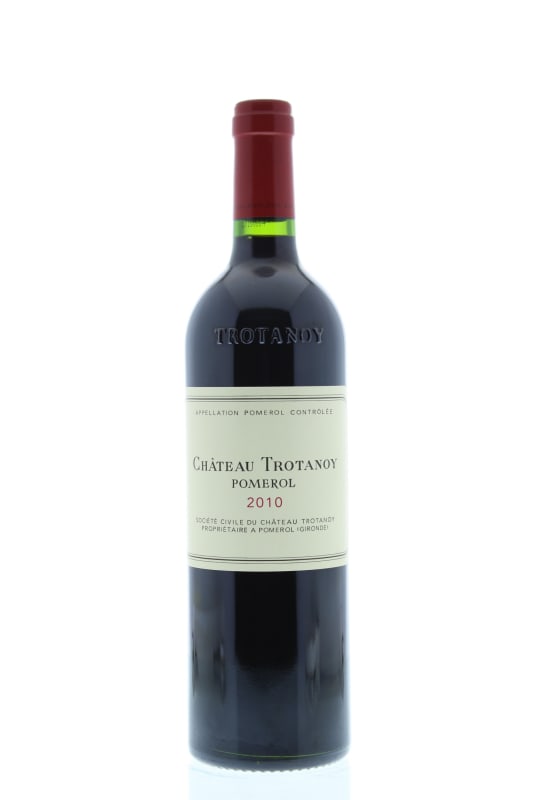


Winemaker Notes
When ready, this wine shows enormous complexity and concentration and belongs to the most sought-after Pomerols. It can easily be kept 25 years or more in great vintages.
Professional Ratings
-
Jeb Dunnuck
As expected, the 2010 Château Trotanoy is a dense, powerful, masculine Pomerol in the vintage that does everything right. Revealing a deep ruby/plum hue, as well as a smorgasbord-like array of black cherries, currants, iron, graphite, and chocolate, it hits the palate with full-bodied richness, a deep, concentrated mid-palate, and sensational length. It still has plenty of tannins lurking under the fruit, yet everything is just perfectly balanced, giving this an incredible seamlessness on the palate that makes it so compelling.
-
James Suckling
Stunning nose with wild strawberries, vanilla and raspberries. Opens up with a little time in the glass to sweet licorice, blueberries and some graphite. Round and full on the palate with an amazing fruit and refined tannins. Truly superb. Hard not to drink now.
-
Wine Spectator
Dense and slightly chewy, this features girders of charcoal-coated grip running from start to finish, along with bay leaf, smoldering tobacco and warm tar. But don't be fooled—there's also loads of fruit, offering dark plum, blackberry and black currant notes, laced with hints of mulling spice and alder. Terrific old-school grip powers the finish, and should easily pull this through two decades in the cellar. The brick-house Pomerol of the vintage. Best from 2017 through 2040.
-
Robert Parker's Wine Advocate
Deep garnet colored, the 2010 Trotanoy has a nose of prunes, dried mulberries and baked black cherries with hints of cigar box and menthol. Medium to full-bodied, the palate delivers a good amount of muscular fruit with a firm, grainy texture and just enough freshness to carry the earthy flavors to a long finish.
-
Wine Enthusiast
A complex wine, exhibiting smoky tannins, rich fruit, a dark texture and concentration. Produced by the Moueix winemaking team, it feels complete with its sense of style and elegance as well as weight. Give this powerful wine many years in the cellar. Cellar Selection.


One of the world’s most classic and popular styles of red wine, Bordeaux-inspired blends have spread from their homeland in France to nearly every corner of the New World. Typically based on either Cabernet Sauvignon or Merlot and supported by Cabernet Franc, Malbec and Petit Verdot, the best of these are densely hued, fragrant, full of fruit and boast a structure that begs for cellar time. Somm Secret—Blends from Bordeaux are generally earthier compared to those from the New World, which tend to be fruit-dominant.

A source of exceptionally sensual and glamorous red wines, Pomerol is actually a rather small appellation in an unassuming countryside. It sits on a plateau immediately northeast of the city of Libourne on the right bank of the Dordogne River. Pomerol and St-Émilion are the stars of what is referred to as Right Bank Bordeaux: Merlot-dominant red blends completed by various amounts of Cabernet Franc or Cabernet Sauvignon. While Pomerol has no official classification system, its best wines are some of the world’s most sought after.
Historically Pomerol attached itself to the larger and more picturesque neighboring region of St-Émilion until the late 1800s when discerning French consumers began to recognize the quality and distinction of Pomerol on its own. Its popularity spread to northern Europe in the early 1900s.
After some notable vintages of the 1940s, the Pomerol producer, Petrus, began to achieve great international attention and brought widespread recognition to the appellation. Its subsequent distribution by the successful Libourne merchant, Jean-Pierre Mouiex, magnified Pomerol's fame after the Second World War.
Perfect for Merlot, the soils of Pomerol—clay on top of well-drained subsoil—help to create wines capable of displaying an unprecedented concentration of color and flavor.
The best Pomerol wines will be intensely hued, with qualities of fresh wild berries, dried fig or concentrated black plum preserves. Aromas may be of forest floor, sifted cocoa powder, anise, exotic spice or toasted sugar and will have a silky, smooth but intense texture.