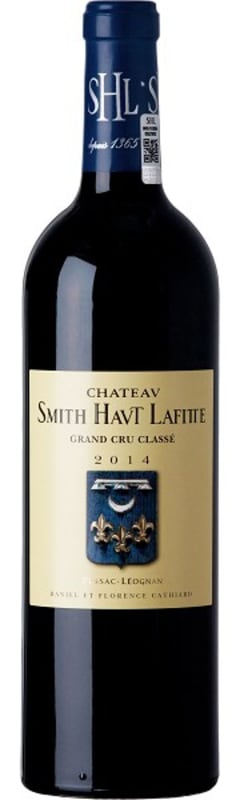


Winemaker Notes
Blend: 62% Cabernet Sauvignon, 30% Merlot, 6% Cabernet Franc, 2% Petit Verdot
Professional Ratings
-
Wine Enthusiast
Dense and beautifully ripe, this is a rounded rich wine. It focuses on the tropical yellow-fruit spectrum. That gives a full wine with wood-spice hints and just the right amount of citrus acidity to give it a lift. Drink this finely structured wine from 2023. Cellar Selection
-
James Suckling
A big black-cherry and bitter-chocolate nose leads into a rich, concentrated palate, where the fruit easily holds sway over the powerful, dry tannins. It’s these that drive everything along right through to the assertive, slightly earthy finish; impressive long-term stuff! Try in 2021.
-
Wilfred Wong of Wine.com
I have always found the Smith Haut Lafitte to be a rather large wine. The 2014 vintage exhibits plenty of richness, yet it stays this side of going over the top. The wine, offering black fruits, graphite, and savory herbs, is in a class of its own. The winery has found a way to tame it and allow it to retain the dusty and earthy flavors so typical of the Graves area. (Tasted: January 27, 2017, San Francisco, CA)
-
Decanter
They have so nailed the 'full extraction without making it obvéous' trick at this property. Clearly high oak and firm tannins but rich, enrobed, black coffee and rich damson fruit, will age well, get really fine tannic structure, but with the slightly glamorous house style, the Mouton of Pessac-Léognan. Lovely. The vibrancy and integrity of the fruit from their biodynamic/organic work in the vineyard is very clear.
-
Wine Spectator
This has a generous feel, with ripe fig, boysenberry and blueberry compote fruit flavors that are entwined with alluring roasted apple wood, melted licorice and warm fruitcake notes. The broad, mouthcoating finish has a terrific graphite underpinning to stay honest. Best from 2020 through 2035.
-
Jeb Dunnuck
The 2014 Smith Haut Lafitte shows the elegant style of the vintage, yet the depth of fruit that’s common from this estate. Blackberries, currants, scorched earth, spicy oak and tobacco leaf nuances give way to a medium to full-bodied, beautifully textured 2014 that has ripe tannin and nicely integrated acidity. It has tons of character and is a beautiful, elegant wine to drink over the coming 15 years or so.
-
Robert Parker's Wine Advocate
The 2014 Smith-Haut-Lafitte has a fragrant mulberry and strawberry scented bouquet with cedar and subtle undergrowth scents emerging with time. There is something almost Musigny-like here (written as a complement incidentally—why not be compared to the greatest Burgundy Grand Cru?). The palate is medium-bodied with a soft and mellow opening. Quite spicy in the mouth with leather-tinged fruit on the open and inviting finish, there is something very approachable about this Smith-Haut-Lafitte, though like the 2014 Pape-Clement, it contains the substance to drink well over 10-15 years.


One of the world’s most classic and popular styles of red wine, Bordeaux-inspired blends have spread from their homeland in France to nearly every corner of the New World. Typically based on either Cabernet Sauvignon or Merlot and supported by Cabernet Franc, Malbec and Petit Verdot, the best of these are densely hued, fragrant, full of fruit and boast a structure that begs for cellar time. Somm Secret—Blends from Bordeaux are generally earthier compared to those from the New World, which tend to be fruit-dominant.

Recognized for its superior reds as well as whites, Pessac-Léognan on the Left Bank claims classified growths for both—making it quite unique in comparison to its neighboring Médoc properties.
Pessac’s Chateau Haut-Brion, the only first growth located outside of the Médoc, is said to have been the first to conceptualize fine red wine in Bordeaux back in the late 1600s. The estate, along with its high-esteemed neighbors, La Mission Haut-Brion, Les Carmes Haut-Brion, Pique-Caillou and Chateau Pape-Clément are today all but enveloped by the city of Bordeaux. The rest of the vineyards of Pessac-Léognan are in clearings of heavily forested area or abutting dense suburbs.
Arid sand and gravel on top of clay and limestone make the area unique and conducive to growing Sémillon and Sauvignon blanc as well as the grapes in the usual Left Bank red recipe: Cabernet Sauvignon, Merlot, Cabernet Franc and miniscule percentages of Petit Verdot and Malbec.
The best reds will show great force and finesse with inky blue and black fruit, mushroom, forest, tobacco, iodine and a smooth and intriguing texture.
Its best whites show complexity, longevity and no lack of exotic twists on citrus, tropical and stone fruit with pronounced floral and spice characteristics.