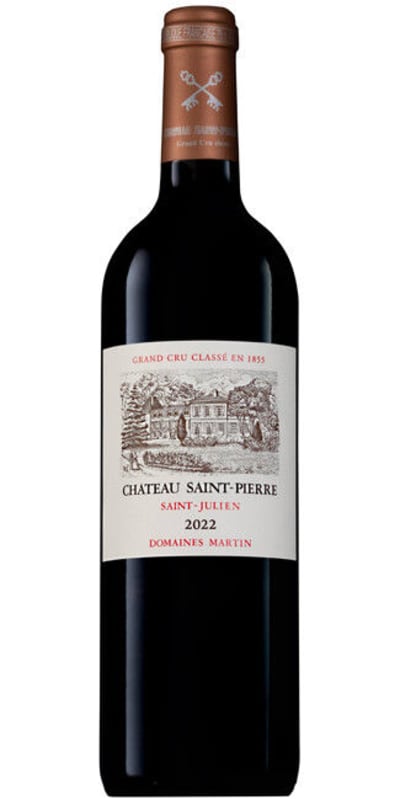


Winemaker Notes
The 2022 vintage is in impeccable health, perfect ripeness, the wines are a very deep crimson color, very aromatic and a full, fleshy structure in the mouth. Surely a wine for immediate pleasure combining very good cellaring.
Serve with meat dishes, veal, pork, beef, lamb, duck, game, chicken, roasted, braised, stewed, and grilled dishes.
Blend: 80% Cabernet Sauvignon, 12% Merlot, 6% Cabernet Franc, 2% Petit Verdot
Professional Ratings
-
Jeb Dunnuck
Blackcurrants, graphite, crushed stone, and liquid violet notes all emerge from the 2022 Château Saint-Pierre (Saint-Julien), another deeply colored, powerful, full-bodied Saint-Julien. Coming from 80% Cabernet Sauvignon, 12% Merlot, and the rest Cabernet Franc and Petit Verdot, it has a layered, elegant mouthfeel, beautiful tannins, and a great finish. It's going to stand with the truly greats from not only this terroir but the entire Médoc.
-
James Suckling
A posh, sophisticated St.-Julien that manages to maintain freshness, nuanced complexity and class in a hot year. In fact, this is one of the best Saint-Pierres. Layered and poised, with lots of minerals, dark berries and pencil shavings, followed by fresh, firm and polished tannins. The finish goes on for almost a minute. Really exciting, even for the 2022, when a lot of the wines from the left bank did really well. Drink from 2029.
-
Vinous
The 2022 Saint-Pierre (Saint-Julien), which has more Cabernet Sauvignon in the blend, is more opulent and primal on the nose than the Gloria. Blueberry filters through black fruit as hints of iodine and violet emerge over time. The medium-bodied palate offers sapid black fruit, fine-boned tannins and wonderful structure and purity. What I appreciate about this Saint-Pierre is that it is quintessentially Saint-Julien. Armed with a reassuringly long finish, this has immense potential.
-
Wine Spectator
Ripe and vivid, with plum, cassis and boysenberry notes spilling out. There's just enough singed apple wood and cast iron to keep this focused. Violet and anise accents chime in the background. A decidedly not-shy St.-Julien that captures this vintage profile nicely. Cabernet Sauvignon, Merlot, Cabernet Franc and Petit Verdot. Best from 2027 through 2040. Tasted twice, with consistent notes.
-
Decanter
Ripe and glossy, this has vibrant fruit with a heady spiced aspect alongside cool freshness. Lovely frame and structure, filling and wide but controlled with a lovely freshly picked strawberry juiciness. A touch powdery and mineral towards the finish, a chalky aspect lingers, but this has nice terroir markers and a calm confidence overall.
-
Robert Parker's Wine Advocate
Aromas of cassis, blackberries, pencil shavings and licorice introduce the 2022 Saint-Pierre, a medium to full-bodied, velvety and suave wine that's rich but integrated, concluding with a clean, gently tannic finish. A touch less flamboyant than this estate could be in the past, it's a more classical expression of this estate.
Rating: 93+


One of the world’s most classic and popular styles of red wine, Bordeaux-inspired blends have spread from their homeland in France to nearly every corner of the New World. Typically based on either Cabernet Sauvignon or Merlot and supported by Cabernet Franc, Malbec and Petit Verdot, the best of these are densely hued, fragrant, full of fruit and boast a structure that begs for cellar time. Somm Secret—Blends from Bordeaux are generally earthier compared to those from the New World, which tend to be fruit-dominant.

An icon of balance and tradition, St. Julien boasts the highest proportion of classed growths in the Médoc. What it lacks in any first growths, it makes up in the rest: five amazing second growth chateaux, two superb third growths and four well-reputed fourth growths. While the actual class rankings set in 1855 (first, second, and so on the fifth) today do not necessarily indicate a score of quality, the classification system is important to understand in the context of Bordeaux history. Today rivalry among the classed chateaux only serves to elevate the appellation overall.
One of its best historically, the estate of Leoville, was the largest in the Médoc in the 18th century, before it was divided into the three second growths known today as Chateau Léoville-Las-Cases, Léoville-Poyferré and Léoville-Barton. Located in the north section, these are stone’s throw from Chateau Latour in Pauillac and share much in common with that well-esteemed estate.
The relatively homogeneous gravelly and rocky top soil on top of clay-limestone subsoil is broken only by a narrow strip of bank on either side of the “jalle,” or stream, that bisects the zone and flows into the Gironde.
St. Julien wines are for those wanting subtlety, balance and consistency in their Bordeaux. Rewarding and persistent, the best among these Bordeaux Blends are full of blueberry, blackberry, cassis, plum, tobacco and licorice. They are intense and complex and finish with fine, velvety tannins.