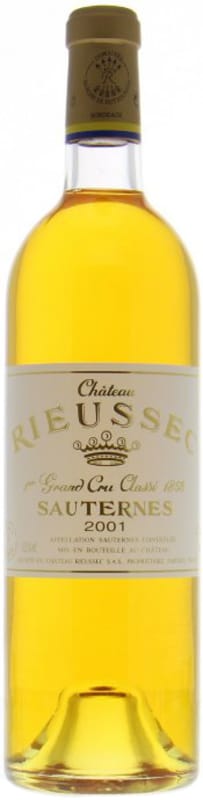


Winemaker Notes
#1 Wine Spectator Top 100 of 2004
In the early tastings, the nose is powerful and dominated by apricot and candied melon notes. In the mouth the attack is delicate and full of finesse. It then develops in volume and an amazing sensation arises in the mouth. The balance between acidity and liquor is so perfect that the sugar totally disappears. This very rare perception can only be experienced with exceptional Sauternes.
Professional Ratings
-
James Suckling
This is a crazy wine! It’s sweet, but not sugary. Mushrooms, furniture wax, spices then dried oranges, lemons, pineapples, and just a hint of vanilla. Full-bodied, with great density and power, yet balanced and refined.
-
Wine Spectator
Like lemon curd on the nose, turning to honey and caramel. Full-bodied and very sweet, with fantastic concentration of ripe and botrytized fruit, yet balanced and refined. Electric acidity. Lasts for minutes on the palate. This is absolutely mind-blowing. This is the greatest young Sauternes I have ever tasted.
-
Jeb Dunnuck
A magical Sauternes that shows how good the 2001 vintage was for the region, the 2001 Château Rieussec offers a spectacular nose of caramelized quince, honeyed flowers, crème brulée, and exotic spices. Wonderfully pure and precise, with good acidity, it still brings a monster of a mid-palate and has boatloads of fruit and opulence, flawless balance, and a brilliant finish.
-
Robert Parker's Wine Advocate
A monumental effort, the 2001 Rieussec boasts a light to medium gold color in addition to a fabulous perfume of honeysuckle, smoky oak, caramelized tropical fruits, creme brulee, and Grand Marnier. The wine is massive and full-bodied yet neither over the top nor heavy because of good acidity. With intense botrytis as well as a 70-75-second finish, this amazing Sauternes will be its apogee between 2010-2035.


Apart from the classics, we find many regional gems of different styles.
Late harvest wines are probably the easiest to understand. Grapes are picked so late that the sugars build up and residual sugar remains after the fermentation process. Ice wine, a style founded in Germany and there referred to as eiswein, is an extreme late harvest wine, produced from grapes frozen on the vine, and pressed while still frozen, resulting in a higher concentration of sugar. It is becoming a specialty of Canada as well, where it takes on the English name of ice wine.
Vin Santo, literally “holy wine,” is a Tuscan sweet wine made from drying the local white grapes Trebbiano Toscano and Malvasia in the winery and not pressing until somewhere between November and March.
Rutherglen is an historic wine region in northeast Victoria, Australia, famous for its fortified Topaque and Muscat with complex tawny characteristics.

Sweet and unctuous but delightfully charming, the finest Sauternes typically express flavors of exotic dried tropical fruit, candied apricot, dried citrus peel, honey or ginger and a zesty beam of acidity.
Sémillon, Sauvignon Blanc, Sauvignon Gris and Muscadelle are the grapes of Sauternes. But Sémillon's susceptibility to the requisite noble rot makes it the main variety and contributor to what makes Sauternes so unique. As a result, most Sauternes estates are planted to about 80% Sémillon. Sauvignon is prized for its balancing acidity and Muscadelle adds aromatic complexity to the blend with Sémillon.
Botrytis cinerea or “noble rot” is a fungus that grows on grapes only in specific conditions and its onset is crucial to the development of the most stunning of sweet wines.
In the fall, evening mists develop along the Garonne River, and settle into the small Sauternes district, creeping into the vineyards and sitting low until late morning. The next day, the sun has a chance to burn the moisture away, drying the grapes and concentrating their sugars and phenolic qualities. What distinguishes a fine Sauternes from a normal one is the producer’s willingness to wait and tend to the delicate botrytis-infected grapes through the end of the season.