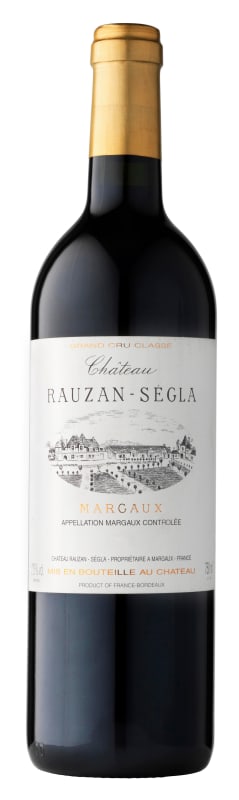


Winemaker Notes
Blend: 56% Cabernet Sauvignon, 42% Merlot, 1% Petit Verdot and 1% Cabernet Franc
Professional Ratings
-
James Suckling
Fantastic aromas of blackberries, blackcurrants and strawberries follow through to a full body, super-integrated tannins and an extremely long finish. The bright acidity gives the wine a linear edge that focuses in all the fruit. Minerally. Drink in 2021.
-
Wine Enthusiast
With good balance between the fruit and acidity, this is a stylishly structured wine. The tannic core grounds the fruitiness and gives both texture and aging potential to this ripe, fresh wine. Barrel Sample: 94
-
Jeb Dunnuck
The 2014 Rauzan-Ségla is another classic Margaux that shines for its elegance and complexity, the hallmarks of this beautiful estate. Ample black and blue fruits, cedarwood, and spice notes all emerge from the glass, followed by medium to full body, a beautiful texture, polished, sweet tannins, and a great finish. It’s unquestionably enjoyable today, but it will benefit from a handful of years in the cellar and keep for 20-25 years.
-
Robert Parker's Wine Advocate
The deep garnet colored 2014 Rauzan-Ségla reveals an open-knit, expressive nose of potpourri, unsmoked cigars, spice box and red loam with a core of plum preserves, blackcurrant jelly and bay leaves plus a touch of garrigue. Medium to full-bodied with compelling earthy layers and a real savoriness in the mouth, it has firm, chunky tannins and bold freshness, finishing on a lingering mineral note. The blend this year is 56% Cabernet Sauvignon, 42% Merlot, 1% Petit Verdot and 1% Cabernet Franc, harvested between September 22nd and October 16th, at an average yield of 37 hectoliters per hectare. It was aged for 18 months in French oak, 60% new. The alcohol is 13.5%.
-
Wine Spectator
Soft-edged, with plum and black cherry fruit, laced with light sandalwood and tea notes that linger through the supple finish, which gains some extra velvety layers of blackberry and anise with air. Barrel Sample: 89-92


One of the world’s most classic and popular styles of red wine, Bordeaux-inspired blends have spread from their homeland in France to nearly every corner of the New World. Typically based on either Cabernet Sauvignon or Merlot and supported by Cabernet Franc, Malbec and Petit Verdot, the best of these are densely hued, fragrant, full of fruit and boast a structure that begs for cellar time. Somm Secret—Blends from Bordeaux are generally earthier compared to those from the New World, which tend to be fruit-dominant.

Silky, seductive and polished are the words that characterize the best wines from Margaux, the most inland appellation of the Médoc on the Left Bank of Bordeaux.
Margaux’s gravel soils are the thinnest of the Médoc, making them most penetrable by vine roots—some reaching down over 23 feet for water. The best sites are said to be on gentle outcrops, or croupes, where more gravel facilitates good drainage.
The Left Bank of Bordeaux subscribes to an arguably outdated method of classification but it is nonetheless important in regards to history of the area. In 1855 the finest chateaux were deemed on the basis of reputation and trading price—at that time. In 1855, Chateau Margaux achieved first growth status, yet it has been Chateau Palmer (officially third growth from the 1855 classification) that has consistently outperformed others throughout the 20th century.
Chateau Margaux in top vintages is capable of producing red Cabernet Sauvignon based wines described as pure, intense, spell-binding, refined and profound with flavors and aromas of black currant, violets, roses, orange peel, black tea and incense.
Other top producers worthy of noting include Chateau Rauzan-Ségla, Lascombes, Brane-Cantenac, and d’Issan, among others.
The best wines of Margaux combine a deep ruby color with a polished structure, concentration and an unrivaled elegance.