


Winemaker Notes




Nestled on the shores of the Mediterranean and the foothills of the Cevennes region of southern France, Chateau Puech-Haut’s vineyards span 625 acres in Côteaux du Languedoc AOC, including 230 acres in Saint Drézéry and 55 acres in Pic Saint Loup. The estate’s vineyards are mainly planted to Syrah, Grenache, Carignan (50-60-year-old vines), Viognier, Marsanne and Roussanne.
The history of Château Puech-Haut is above all the story of Gérard Bru, a visionary man who built his vineyard just as he built his own life: starting from nothing and creating and achieving a dream without question. In 1980, Bru bought a parcel that was planted to olive trees and wasn’t part of the Languedoc A.O.C. classification. Bru was impressed with the area’s unique terroir and believed it was ideal for growing premium grapes, with its clay and limestone soils topped with a layer of rounded pebbles. The property was converted from olives to grapes and the property’s farmhouse evolved to Château Puech-Haut, producing its first wines a few years later.
The wines of Château Puech-Haut are all full of history and endowed with a singular identity with strong character. In summarizing the Estate’s philosophy, Gérard Bru states, “Our objective is clear: produce the greatest wines by respecting and captivating various terroirs is the philosophy of Puech Haut.”
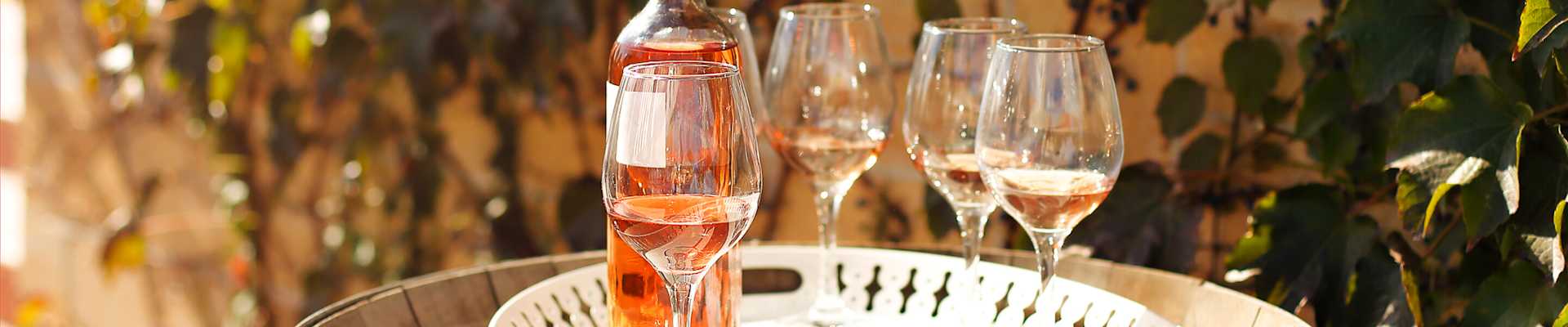
Whether it’s playful and fun or savory and serious, most rosé today is not your grandmother’s White Zinfandel, though that category remains strong. Pink wine has recently become quite trendy, and this time around it’s commonly quite dry. Since the pigment in red wines comes from keeping fermenting juice in contact with the grape skins for an extended period, it follows that a pink wine can be made using just a brief period of skin contact—usually just a couple of days. The resulting color depends on grape variety and winemaking style, ranging from pale salmon to deep magenta.

Approved for both red and rosé wines, Saint-Drézéry sits between Montpellier and Nîmes at the eastern end of the Languedoc, deep in the hot, dry lowlands along the Mediterranean coast. Comprised of the great southern French grapes, Syrah, Grenache and Mourvèdre, with traditional Languedoc favorite Carignan blended in for rustic grip, the wines are robust and full-bodied, but retain acidity due to low rainfall and cool nights. Tending toward the meaty, roasted style of Languedoc red, the region’s wines show fig, stewed plum, and blackberry fruit, with licorice and pepper spice. The product of a wine tradition which traces its roots to the Romans, the quality of Saint-Drézéry reds have been recognized for centuries. Learn about Barossa wine, common tasting notes, where the region is and more ...