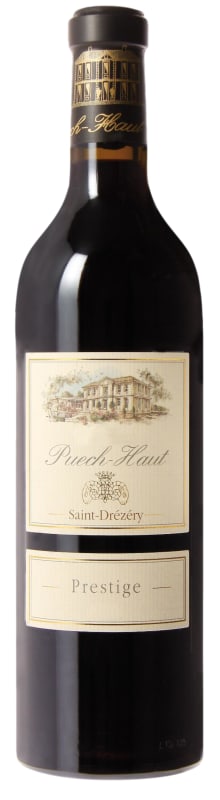


Winemaker Notes
Blend: 60% Syrah, 30% Grenache, 10% Carignan
Professional Ratings
-
James Suckling
A fruity, juicy, velvety and charming red with notes of cherries, raspberries, cassis and olives. Medium body, fine tannins and a straightforward development on the palate. Fruity and agreeable.
-
Wilfred Wong of Wine.com
The Languedoc growing region is one of the top wine-producing areas in southern France, and Puech-Haut is an excellent producer. The winery's 2021 vintage offers aromas and flavors of aromatic spices, blackberries, and dried earth. This wine is perfect with cassoulet. (Tasted: March 28, 2025, San Francisco, CA)
-
Wine Enthusiast
This wine has a nose of blackberry, dried red-cherry flakes, strawberry and huckleberry. A mixture of red and black fruit dance on the midpalate with each taking turn as the lead. Slightly grippy tannins lend concentration and body and continue headstrong through to the finish.
-
Wine Spectator
Big and ripe, with winey character and plenty of juicy, concentrated fruit. Not shy on flavor or warmth, this offers earthy, sanguine animal notes for contrast. A woodsy quality echoes on the long, generous finish, polished with grilled apple wood details. Syrah, Grenache and Carignan. Drink now through 2030. 2,100 cases made, 28 cases imported.




Nestled on the shores of the Mediterranean and the foothills of the Cevennes region of southern France, Chateau Puech-Haut’s vineyards span 625 acres in Côteaux du Languedoc AOC, including 230 acres in Saint Drézéry and 55 acres in Pic Saint Loup. The estate’s vineyards are mainly planted to Syrah, Grenache, Carignan (50-60-year-old vines), Viognier, Marsanne and Roussanne.
The history of Château Puech-Haut is above all the story of Gérard Bru, a visionary man who built his vineyard just as he built his own life: starting from nothing and creating and achieving a dream without question. In 1980, Bru bought a parcel that was planted to olive trees and wasn’t part of the Languedoc A.O.C. classification. Bru was impressed with the area’s unique terroir and believed it was ideal for growing premium grapes, with its clay and limestone soils topped with a layer of rounded pebbles. The property was converted from olives to grapes and the property’s farmhouse evolved to Château Puech-Haut, producing its first wines a few years later.
The wines of Château Puech-Haut are all full of history and endowed with a singular identity with strong character. In summarizing the Estate’s philosophy, Gérard Bru states, “Our objective is clear: produce the greatest wines by respecting and captivating various terroirs is the philosophy of Puech Haut.”

With bold fruit flavors and accents of sweet spice, Grenache, Syrah and Mourvèdre form the base of the classic Rhône Red Blend, while Carignan, Cinsault and Counoise often come in to play. Though they originated from France’s southern Rhône Valley, with some creative interpretation, Rhône blends have also become popular in other countries. Somm Secret—Putting their own local spin on the Rhône Red Blend, those from Priorat often include Merlot and Cabernet Sauvignon. In California, it is not uncommon to see Petite Sirah make an appearance.

An extensive appellation producing a diverse selection of good quality and great values, Languedoc spans the Mediterranean coast from the Pyrenees mountains of Roussillon all the way to the Rhône Valley. Languedoc’s terrain is generally flat coastal plains, with a warm Mediterranean climate and frequent risk of drought.
Virtually every style of wine is made in this expansive region. Most dry wines are blends with varietal choice strongly influenced by the neighboring Rhône Valley. For reds and rosés, the primary grapes include Grenache, Syrah, Carignan, Cinsault and Mourvèdre. White varieties include Grenache Blanc, Muscat, Ugni Blanc, Vermentino, Macabéo, Clairette, Piquepoul and Bourbelenc.
International varieties are also planted in large numbers here, in particular Chardonnay, Sauvignon Blanc and Cabernet Sauvignon.
The key region for sparkling wines here is Limoux, where Blanquette de Limoux is believed to have been the first sparkling wine made in France, even before Champagne. Crémant de Limoux is produced in a more modern style.